Fabric Friday Review: Higgs & Higgs Fabric

It’s been a few years since I’ve written a fabric shop review as frankly I ran out of fabric space so I had to start sewing the fabric from the shops I’d been reviewing. It’s a nice problem to have but not one that is easy to blog about I’ll be honest. However when Higgs & Higgs asked me if I’d like to review their online shop I jumped at the chance because I adore their fabrics! Every single show I go to that Higgs & Higgs is at, I end up buying something. It’s like a compulsion. Their stalls are always beautifully laid out and they always have a good selection of cosy knit fabrics (my winter kryptonite) so honestly it’s a foregone conclusion. What I’m slightly ashamed to say is that I didn’t know they had a website! So lets talk core details:

Higgs & Higgs

  • Online Shop / Physical Shop / Both
  • Web Link: https://higgsandhiggs.com
  • Core Purpose: Dressmaking, Upholstery, Haberdashery
  • Unit of Sale For Fabric: 0.5m / 1m / 2m / custom amount

Now let’s get the difficult bit out of the way, yes Higgs & Higgs have asked me to review them and they have sent me some fabric of my choosing. However*, as always all views are my own. Whether I’m sent fabric or a sewing machine to review I will always be 100% honest. I also do freelance website improvement reviews for fabric shops that are not published on here so you’d best believe I will always be honest about my experience. So ‘how will this review work if you’ve already been sent the fabric?’ I hear you cry, well it’s going to work like this. I get to pick the fabric so it will be the standard approach I take to web fabric shopping. I will go through the whole website, try to find fabrics I want, go through the selection to put them in my basket to see how that works, I will report on pricing, delivery, etc as normal, and then once they send me the fabric I’ll report on delivery, quality, packaging etc. So basically, I’ll do what I always do, it’s just on this occasion very kindly Higgs + Higgs will have gifted me the fabric.

Fabric Types

Higgs + Higgs stock a brilliant range of fabrics for dressmaking, upholstery, and quilting, plus they stock bias-binding and haberdashery so they make a great one stop shop. In terms of price the most affordable fabrics are as you would expect the cottons at £6.99pm with the upper end at £27/28pm for wools. In terms of fabric shops generally I would say they are middle ground in terms of affordability across their range of fabrics and we should also note that the quality of the fabric is reflected in the price.

This time I had a specific project in mind so choosing my fabric was really challenging because there are so many good autumnal fabrics. You all know I love a knit but on the other hand I’ve been wanting a white/cream denim midi skirt as a transitional piece. So my core choices were either the Luxe Faux Angora Cable Knit in Black or the Snow White 7oz Stretch Denim. In the end I decided as we are heading into Autumn/Winter I wanted to go cosy and chose the Black Luxe Faux Angora Cable Knit to make something I could wear in the office or at home. Although on this occasion my fabric was gifted I did see the payment process through to give it a test. Overall its what you’d expect from a payment system, I like that it’s integrated with Apple Pay for a speedier checkout, and unlike a lot of other websites the discount code box is obvious and the interface is clean and simple to use.

Overall the fabric buying process is very smooth. I like the standard measurements of 0.5m, 1m, 2m, as well as a custom option for the length you would like. The minimum is 0.5m but you can buy fabric 10cm at a time. There are a nice selection of capsule wardrobe patterns and a well-stocked haberdashery. In terms of delivery it’s £3.50 for orders under £50 and free delivery over £50 and it’s a pretty speedy 2-3 day. Not the most expensive delivery, particularly post-covid where I know courier prices have skyrocketed, but worth bearing in mind. My fabric arrived in less than 48 hours, it was well packaged, and arrived in great condition. Given the breadth of fabrics I’d recommend getting your moneys worth on free delivery and buying your bulkier autumnal and winter fabrics in one session.

Website Design & Functionality

The website is easy to use, the refresh and page load rate is really good. Why does this matter? Because when you have 15 tabs open of different fabrics it means that website still loads quickly which makes fabric shopping that bit easier. The only slight irritation I would note is that the side menu isn’t optimised which would be a good thing to fix to make navigation even easier. There are a couple of broken links but that is fairly common for websites with a high number of fabric types that change regularly. However that being said, I really like the search functionality from the top bar and its clear that effort has been put into the web design to ensure its easy to browse the full catalogue of fabrics while also being able to break down into sub-genres of fabric type and even patterned or plain within those typologies. They stock so many types of fabric that being able to search in this detail is a godsend.

When scrolling for fabric, you can filter by price or popularity which is helpful. I also love the detail on every listing with fabric information, good photo quality – and yes I partially wanted to get black fabric to see how the photo matched the reality – this is a review after all. Each fabric landing page has suggestions for what you could use it to make and there are not only detailed fabric composition stats but there are also washing instructions which is brilliant and greatly appreciated. Particularly for this upcoming project as I’ll be working with a faux Angora knit that I do not want to ruin it by accident!

So you guys know the score or you will in a second! Let’s do the round-up.

Review Score:

  • Range of Fabrics: 9
  • Cost: 7
  • Delivery (Speed/Cost): 7
  • Ease of use: 8
  • Ease of payment: 9

Total Average Score: 8/10

Overall I am impressed with Higgs & Higgs, they are an excellent one stop shop and I look forward to visiting them in person next time I’m over that way. I like the range of fabrics, I particularly like their new quilted fabrics which would make an amazing Pogonip Pullover or a Megan Nielsen Hovea Coat, and I love the amount of effort they put into telling you about each fabric. Head over to their website to have a nosy at their stock and if you are ever at one of the sewing shows look them up and see for yourself! I never leave without at least one new knitted fabric.

2 Months To Go: Reflections On Sewing My Wedding Dress

Did I take a 9 month break from the blog intentionally? No. In fact, I don’t think I ever really announced this on the blog but I am getting married this year! Alongside the PhD, PTVL teaching, my other job as an Analyst, the podcast, sewing, running, and everything else, I decided to sew my own wedding dress. Hubris right? Well not only that but in fact I am sewing;

  • My Wedding Dress
  • My Evening Wedding Dress (I can’t dance in a long dress, I will fall over! Plus this can be worn in the future more easily!)
  • Four Bridesmaids Dresses
  • Four Ties For Groomsmen
  • A Shirt For Adam

So it’s two months to go, and most of the above list isn’t complete; although I did reach what I think will be the final full toile of my wedding dress last night – still a couple of bits to fix but we are 99% there. Am I stressed? Well yes and no. Obviously two months isn’t a desperately long time. However I am an extremely speedy sewist so I’m not too worried about it all. My main stress until two days ago was the all of the shades of velvet I’d carefully chosen were out of stock for my bridesmaids dresses. Fear not! It’s my own fault for trying to buy it in August. Now that it’s September all the velvet is back in the shops and I’ve ordered what I need so we can get going with those when it arrives. So why am I writing this blog? Well for one thing I have steroid insomnia and I woke up at 4:30 in the morning thinking about my wedding dress sewing experience. The main reason though is that I don’t think we speak enough about sewing your own wedding dress as a project. It seems mystic and far off when the reality is that if you’ve made an evening dress, you’ll probably be able to manage a wedding dress. Nonetheless it can be a taboo subject so I thought it might be useful to share my thoughts and tips for anyone who wants to give it a go.

Top Tips For Sewing Your Wedding Dress

To be clear this is not going to be a highly technical blog about basting, seam finishes, and sewing techniques. Not only are those things radically different depending on the style of dress you choose but also that’s not really what you need to know about sewing your own wedding dress. The fact you may need to look up how to finish a seam is not what will get on your nerves. Wedding dresses are inherently emotional projects. They are also prime real estate for anyone who wants to tell you how you should be sewing your dress. Avoid those people like the plague. The tips I want to share with you are more mindset based. They are to help you through the minefield and hopefully show you by the end that it’s okay to do this exactly how you want to regardless of anyone else’s opinion.

It’s Your Dress.

This sounds glib but at the end of the day the only person wearing this dress is you and even then you’ll only be wearing it for about 12 hours. That means your priorities should be (in this order); comfort, practicality, looking beautiful. Pleasing others is not and should never be on this list. Brides look beautiful when they feel beautiful, not when other people tell them they look it. I once worked a wedding where the bride was 4’11” and as a result she had chosen a stunning 1950s style knee-length fit and flare dress. She looked radiant and it suited her to a tee. Just before she went to walk down the aisle, her mother turned around to her and said ‘oh I wish you hadn’t chosen that dress’ and the bride looked distraught. Her mother went off down the aisle with a groomsmen and I pulled the bride aside for a chat (the role of an event manager can be extremely varied) and I asked her to tell me why she’d chosen this dress. She started telling me how self-conscious she felt about her height, the fact she hates long dresses, how much she loves to dance, how her and her fiancé enjoyed going to lindyhop and swing dance classes, and how unique she felt in her dress. As she told me she became much brighter because she truly loved her dress and felt beautiful regardless of the wisdom her mum had decided to impart. It’s about how you feel in your dress and if someone says to you ‘oh I’m not sure your dress is quite you’ or ‘I would have worn X’ feel free to tell them to wear that to their own wedding or my personal favourite comeback ‘its a good job my wedding isn’t about your outfit’. If you want to feel slinky and svelte? Do it. If you want to live your cinderella dreams? Crack on with my blessing. If you want to go simple and loose? Enjoy! You generally get one chance to sew your own wedding dress, so do it the way you want to, and do it with style.

Only share your progress with people whose opinion you trust.

At the end of the day, sewing your wedding dress is a whole different ballgame to buying one. When you buy a dress you have the stress of finding something you feel perfect in, and to be clear, I’m not minimising that. Saying ‘Yes’ to the perfect dress is not the stress-free single trip that we are led to believe. But. And its a big but. Sewing your wedding dress even if you are using a pattern out of the box will still be more challenging because you have to go through the ugly duck phases where the bust isn’t right or the satin is pulling or the lace isn’t behaving, or the pattern is drafted for someone who is 6ft 4 and you need to adjust it. So as you are going through all of this there are two types of people you may want to show it to; people who sew and can give you genuine advice when you are stuck, or, very close friends or bridesmaids who have no idea how to sew and can just be your personal cheerleader. However when it comes to people who can’t sew here is a word of warning, choose someone who will just be lovely and happy that you are sewing your dress. Do not show your progress stages to anyone who is likely to say any of the following; “I don’t like that bit; why does it look so weird in x place; are you sure you want that design feature; I think it would be nicer if it looked like x; is it supposed to do that?” The progress stages are your proof of concept, your workthroughs, and what you don’t want to do is have your elation at progress dampened by people who think its rubbish because they don’t know these stages are very standard in a sewing project like this. When it comes to people who do sew, just make sure you are clear about the stage you are at and the type of feedback you would like to receive. Tell them it’s a first draft or tell them ‘I just can’t get the fit on my hips correct, can you help?’ but its important to be clear about the feedback you would actually like to receive or else we risk returning to Outcome O. So named(by me) because it turns your pride and elation into ‘oh’ and makes you not want to keep sewing.

Try on every wedding dress you can get your hands on.

A harsh truth of wedding planning whether its venue, flowers, or your wedding dress you will think you want one thing and then you will hate it. The issue is when you are making your dress its a lot of time and investment to put into something you think you will want to wear. When I first went wedding dress “shopping” or ‘our market research trip’ as my mum and sisters referred to it, I tried on every style, every colour, and realised quickly that although your wedding is the chance to wear the dress of your dreams, its also one of the few days that is totally yours. It’s for you and your partner to celebrate a beautiful life event and as a result you want to be comfortable, practical, and feel your best. It will be of no surprise to any of you that my dress is not a confection of tulle and petticoats. But! I had to try on dresses like that just to make sure it wasn’t what I wanted. I tried on the most stunning and enormous dress. It was beautiful, I felt like a princess, and in the photos I look gorgeous. In reality it was a standing still dress. It looked incredible stood on the box in the bridal shop but then you get off the box and walk around and you realise that having the turning circle of a 3.5 tonne van may not be ideal and that’s before we get to the thorny issue of trying to go to the loo. For some people that is their dream and that is brilliant! For me it would have driven me insane in about 5 minutes and I would have felt silly which is not what you want on your wedding day. I only know I don’t want that because I tried it on. So try everything. Try styles you think you’d hate. Try styles you’d never dream of. Try anything and be open to suggestions and then take a million photos. My core conclusions from my shopping trip were as follows:

  • Enormous dresses are beautiful but not for me.
  • Any dress with a corset or corselette is not the best friend of an asthmatic.
  • There is such a thing as too plain.
  • Ask your nearest and dearest to be honest with you and make sure they are on your wavelength. I picked up one dress and my sister remarked ‘it’s fine if you want to look like Glinda the Good Witch’ and she was unerringly correct. The thing is that wouldn’t have occurred to someone else but I would have realised I looked like that 5 minutes before going down the aisle so I’m glad she said it then.
  • First thought best thought. If you look in the mirror and think you look like a cake topper then move on, even if everyone else thinks you look stunning.
  • Make sure you can dance and breathe and move in the style you like.
  • Consider the cost of the fabric and the finish. My favourite dress I tried on was about 80% perfect. I liked the style as a starting point, I liked the way it made me feel, and I really liked that I probably wouldn’t need more than 4m of satin to achieve it. (Side note; the one in the shop didn’t have french seams for £1800 I would expect them on Satin?!)
  • Do not feel guilty for being fussy. You know the saying ‘measure twice, cut once’? Well when it comes to wedding dresses it’s more like a 100:1 ratio.

There are more shades of white than Dulux could dream of and that’s before you get to cream.

This may have been the part I found the most frustrating. Once you enter the world of wedding dresses white isn’t white. You suddenly get white, off-white, pure white, eggshell, ecru, blush (which is a pink type of white), and let’s not forget ivory. It is very very important than you choose the right colour. It’s also mind-numbing. Also bear in mind how colour and tone is created in a wedding dress. Particularly in more voluminous dresses the colour can be built by layer. A white overskirt and white tulle with a blush lining which would give an overall blush finish. The next joy on your plate is translating this to fabric shops who do not work to the same colour standards of the bridal industry, because NOBODY does. I went with a sort of vintage off-white. It looks nice next to my skin, it works well with the style of dress I am making, and most importantly for me, it was clearly identifiable in the fabric shop. All I’m saying with this one is mentally prepare yourself to care more about the colour white than you ever have in your life but also remember, it’s not that deep. What matters is that you feel comfortable wearing and working with your fabric. It’s not your job to sell yourself on the very specific tone of ivory blush that frankly doesn’t exist outside the lighting of that bridal shop. Take it back to basics.

It’s going to take months and you’ll still be working on it until the week before.

This is normal. This is unavoidable. You may buy a wedding dress a year out from your wedding but you’ll be in the shop 3 months before for alterations and 1 month out from your wedding you’ll still be getting any snagging done. This isn’t like any other project you will do. You will start a year out with the designs. You might even buy the fabric at this stage or go trawling through samples to find what you like. You’ll do a toile. You’ll love it. You’ll change it by a fraction and suddenly ruin the whole thing. You’ll move from messy toile fabrics to fabrics similar to your dress and the design suddenly won’t work. You’ll lose weight. You’ll gain weight. You’ll go on holiday. Life will happen. You will have deadlines that mean you have to put your wedding dress on one side for a month. Your opinions will change on how you want your dress to look and that is all natural and part of the process. I’ve had lots of people tell me I’ve left everything too late but no one else knows what too late means in your context. I don’t know if its because I am doing a PhD, which is the academic equivalent of sewing your own wedding dress, but I feel very sanguine about working through drafts and drafts for months whether its my thesis or my wedding dress. It makes it easier to know that you’ll be working on it constantly for 9 months to a year and even if you prepare and plan you will still be hemming it the week before so why stress? Which brings me on to my next tip.

Like any project, figure out how you work best.

This is starting to sound like an academic skills blog but read on I promise it’s about sewing. To be brutally honest if I had to sew my wedding dress everyday for a month I would go stark-raving mad. I’m not a little and often person when it comes to creating. Just as with my thesis I am a ‘think about it for 6 weeks then suddenly get struck by inspiration’ kind of person. I need thinking time. I need to mull. I need to consider what I like and what I don’t and crucially why I don’t like it. However this means that once I do decide what I want, I choose a day or a night (normally a night when Adam is out at Jujitsu) and just crack on for 4-8 hours. For someone else the way I work would be intolerable or frankly impossible. There are people who would love to chip away at the project every day. There are people who start their dress two weeks out. There are people who hand sew the entire thing (and to be clear those people are insane) but the point is, you have to figure out what you need and how you best work. I fully intend to go to the Southern Sewcial in October to finish off my panic sewing. I know there will be panic sewing so why not actually book in a day to do it!

Start Somewhere. Start Anywhere. Just Start.

Its daunting. I’m not going to sit here and say that it isn’t because it is. And frankly it’s supposed to be. You are preparing for a watershed moment in your life and most likely in your sewing career. It’s scary and do you know what? You’re allowed to stress. Even on your toiles you are allowed to stress about it but it’s so much more important to make some progress than none. People will build up wedding dress sewing as the be all and end all but it just isn’t. You are making a dress. You are putting a pattern together just like you do the rest of the time. If, like me, you had a couple of patterns as starting points then I recommend writing your own instructions as you go, but at the end of the day it’s just another sewing project. Admittedly the fabric is more expensive and the stakes are higher, but don’t let that deter you. Your first toile of your wedding dress is always going to be a proof of concept. You’ll love it. You’ll hate it. You’ll know what needs fixing. You’ll see the germ of your design starting the emerge. No matter what you have to start somewhere and it’s never going to be perfect the first time. My way of tackling the existential dread I had about starting? I put a 30 minute timer on and dashed out a full toile. It was basted together in rubbish acetate that cost me £4, the length of the front and back didn’t remotely match. The bust was too small. The train looked like a tiny puddle that had got caught in my sewing machine. The straps were wrong. The shape of the skirts didn’t match. But none of that mattered because I could see that my dress was in there and it would work out eventually. Think of it like a concept car. The doors may not open. None of the electrics are in it. It’s not truly a car. It’s an indication that your concept works and it gives you a road map.

Finally, remember that in a year’s time you will not care how long the seams took or how frustrating rouleau loops and covered buttons are, or how many toiles you went through, because its frankly the least important part of the day. Getting to walk down the aisle and marry your favourite person on the planet should not hinge on your dress. I would marry Adam in my pyjamas with no make-up on at a registry office at 10:00 in the morning on a random Tuesday with no one else there. It’s lovely to get to wear a beautiful dress and be surrounded by friends and family to celebrate your wedding, but never let the dress get in the way of the wedding.

P.S. If anyone, and I do mean ANYONE, decides to tell you how you could have made your dress better on the day of your wedding, have them removed from the venue.

Progress Not Perfection: My Sewing Philosophy

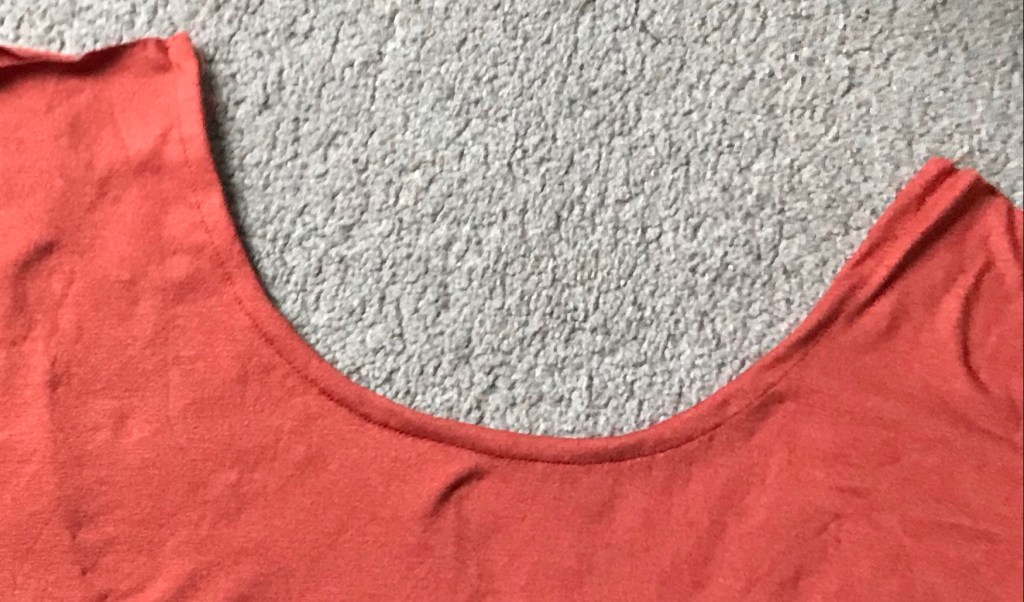
As I sit writing this I have ginger biscuits in the oven, a recipe Ive spent years perfecting, I’m wearing my first pair of Hudson Trackies with a hole that needs repairing, because in the time since I made them I’ve learnt about the existence of triple stitch and its usefulness in trousers, and my first Tammy Handmade Naya Tshirt with slightly dodgy neckline binding, which if I made again now I would ensure I stretched consistently the whole way around. What is the common theme? In order to become proficient in a skill you have to practice it. The first thing you make, write, create, is rarely perfect.

I can make cornish fairings with my eyes shut because I grew up making them with my grandma. Decades of practice have led to a skill I don’t even think about anymore. However along the way there have been burnt batches, oddly shaped biscuits, in correct mixtures, as I’ve honed the skill. Not only is that okay but it is expected. So why don’t we feel the same way about sewing?

Recently I’ve seen a lot of people talking about how much clothing is being ‘churned’ out by instagram sewists. How people are creating badly made garments simply to keep up with the demand of social media sewing. While I’m sure there are some people who attempt to keep pace with algorithm, I think the reality is more simple.

Sewing is a hobby. It is a skill. If it takes 10,000 hours to truly master a skill, then chances are you’re going to be doing a lot of sewing and learning a specific skill once then moving on isn’t going to cut it. You have to do hundreds of zip, thousands of button holes, miles upon miles of under stitching and even then you are probably only an eighth of the way towards mastery. Every crafting hobby involves making something whether its pottery, quilts, loaves of bread, or dresses, and every time you make something you get better.

The fact is that sewing isn’t just a means of creating clothing, it is a hobby and a skill. That means you are going to churn out some god-awful garments in the process. You will insert sleeves backwards or inside out. You will accidentally cut a hole in your almost finished garment when grading a seam. You will accidentally catch part of your garment in a separate seam and want to throw the whole franken-mess of a project out of the window. And at the end of it all you may not even like what you made, but that is okay. You will have learnt something. It might be something as simple as don’t grade seams on a black garment in the dark (yes I have done this exact thing) or that pressing darts up rather than down provides a better shape for a larger bust. You might learn something more substantial such as how to shrink the raw edge of a circle skirt to sew a curved hem or how to sew a welt-pocket.

By placing perfection above all else, not only can you lose the raw creative energy that is so much part of sewing but also you put a lot of pressure on yourself not to put a foot wrong. I experienced this recently while making my Jasika Blazer. I started it back in December and I was merry stitching away until I reached the section on welt pockets and I was stumped. I watched tutorials. I had a go on scrap fabric. But none of it would translate in my head to the blazer in front of me. So I left it on the mannequin until two days ago when I decided that enough was enough and I just did it. Now those pockets are awful. They are truly horrendous. BUT they exist, they function, and they may not be perfect but it’s progress. Now I’m out of the mire of indecision and terror of ruining my blazer, I feel much more relaxed.

Don’t get me wrong here, I’ve made loads of mistakes in the last two days and this blazer will almost definitely end up as a wearable toile rather than the finished article but that is okay because I’m enjoying the process again. I’ve had so much fun just having a go knowing that every mistake I make is a lesson I’m learning. I like to know why I have to do something a certain way and the best teacher for me is doing it wrong and finding out exactly what that is wrong.

There are so many things you should do and shouldn’t do. You should make a toile, you should finish your raw edges, you shouldn’t use your fabric without pre-washing, you shouldn’t sew over your pins, but really what it comes down to is ‘what do you want out of sewing?’ Personally I want to learn, I want to relax, and above all I want to have fun, and the fantastic wardrobe I’m building is merely a by-product.

So today I want to encourage you to go through your ‘Work In Progress’ basket and think about progress not perfection. What tiny thing, or even big thing, can you do to make progress on a project you are stuck on? Can you iron on some interfacing? Can you do a quick rolled hem? Can you overlock the raw edges so its ready for the next big step? Remember it doesn’t have to be perfect. It doesn’t even have to correct! You can always unpick it later. It just needs to be a step forward.

Now if anyone wants me for the next month I’ll be finishing works in progress before starting my new adventure in September!

Pattern Review: SizeMe Sewing Florence Boxy Tee

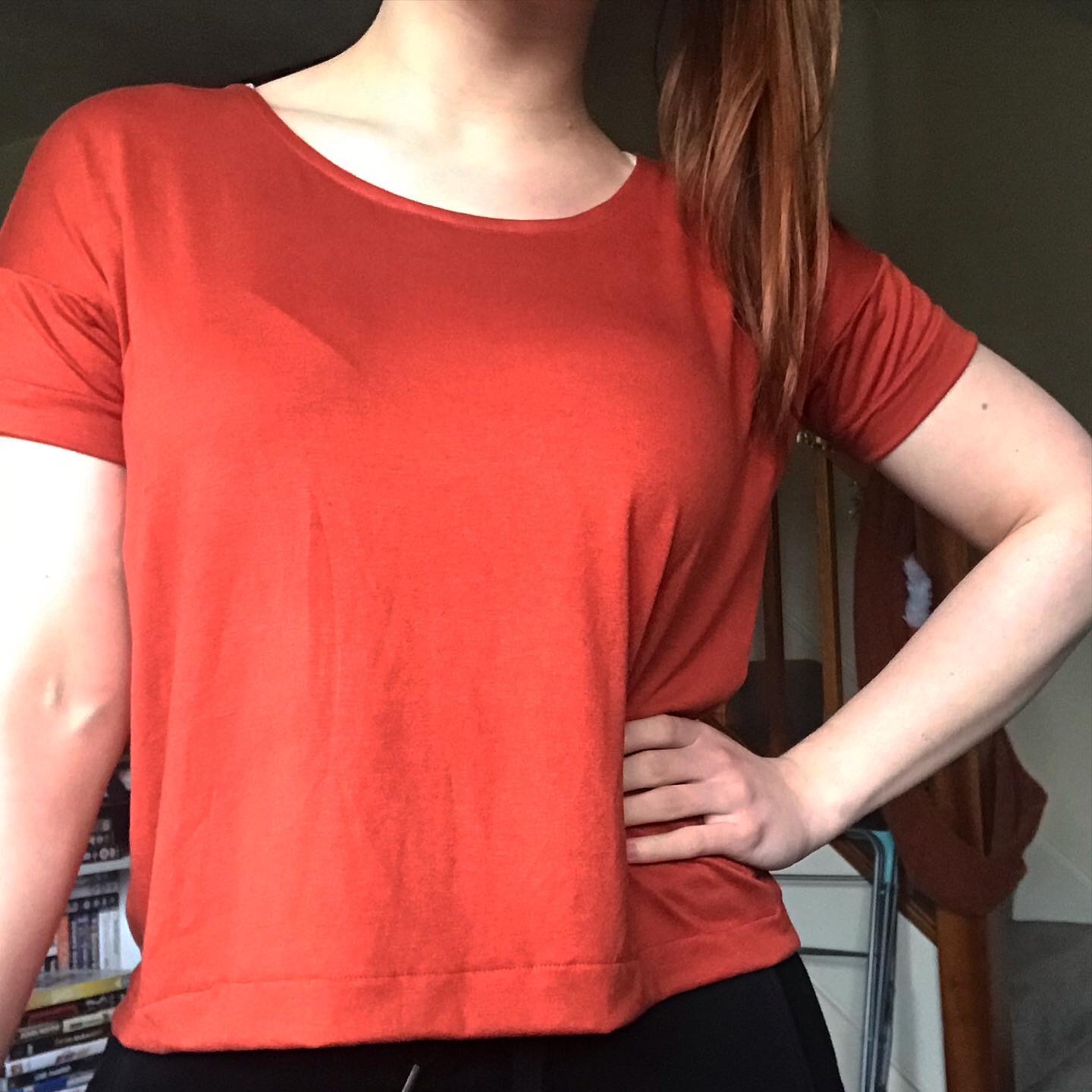
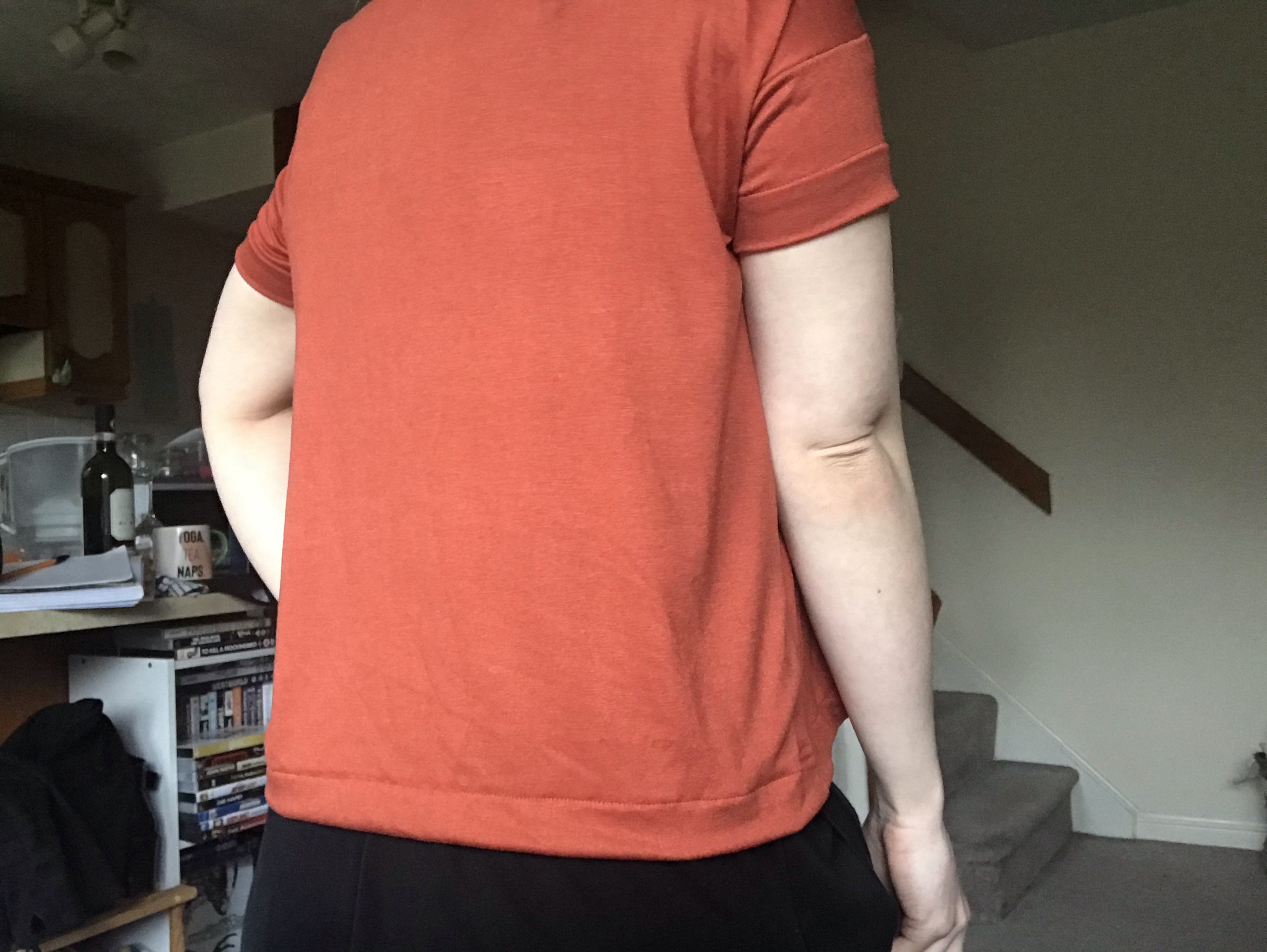
Today I want to tell you about one of my favourite tried and tested patterns. There are very few patterns I’ve made again and again but the Florence Boxy Tee from SizeMe Sewing is one of them. I love the flattering cut, the comfortable fit and versatility of this wardrobe staple pattern. It’s a super simple construction and from cutting out to wearable garment it took me 45 minutes. I made myself another one over Christmas from the off cuts from my sister’s present and I decided I would document the process for you all to show you just how quick and easy it is. Also its worth mentioning at this point that this blogpost is not affiliated or sponsored by SizeMe Sewing, I just wanted to share a favourite pattern of mine.

Materials Required:

  • 1m / 1.5m Lightweight Jersey – I used Rust Viscose Jersey from The Rag Shop
  • Florence Boxy Tee Pattern – SizeMe Sewing
  • Sellotape, Scissors & Printer to assemble PDF
  • Matching Thread

Step 1: Neckline

Top Stitched Neckline

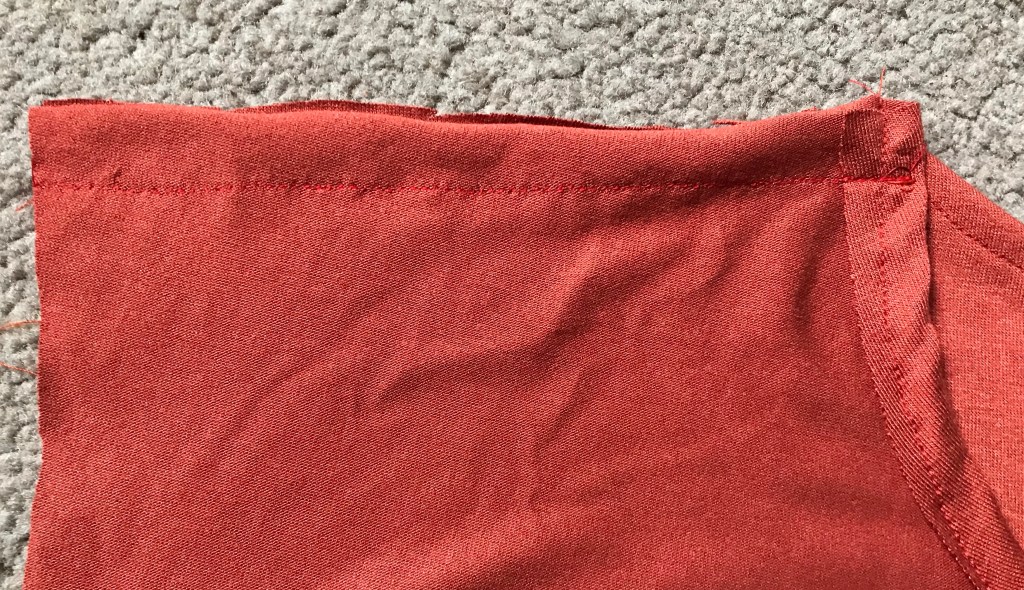
Fold the neckline and stitch down front and back. I did this but turning down the neckline where it joins the shoulder and then i did the centre fold and worked my way along each side. It’s important not to stretch your neckline at this point so take it slowly and use lots of pins. Also remember this stitching will be visible so stitch the fold down from the Right Side and lengthen the stitch.

Step 2: Attach Shoulder Seams

Shoulder Seams Joined

Nice and simple step here, the only trick is to make sure you match the neckline correctly and I used a lightening stitch to make sure the seam was nice and secure. A zigzag stitch often puckers on this fabric so I found a lightening stitch to be a lot more effective.

Step 3: Hem Sleeves

Step 4: Attach Sleeves

Carefully matching the edge of the sleeve with the edge of the bodice, pin and stitch. Nice and simple but I used a lot of pins given how light the fabric is and I really had to take my time as the fabric slipped about loads!

Step 5: Close Side Seams

Again, a very simple step, I would recommend pinning at the under arm join to ensure a smooth side seam and even sleeve and base hems. Use your zigzag or lightening stitch for this step as this seam gets a lot of wear and tear so needs to be reinforced. As this jersey is so lightweight, I double stitched my side seams, doing a second row of stitching 1cm away from the first to make sure they won’t split.

Step 6: Hem

Nothing much to say about this step except that you need to press your hem before and after you do it to make sure you get a nice crisp finish (unlike me who forgot to press this at the time however it has been ironed now I promise!).

And you’re done! It really is that simple, this make has never taken me more than an hour and is now a wardrobe staple for me.

Tilly And The Buttons Eden Coat – Sewing Project

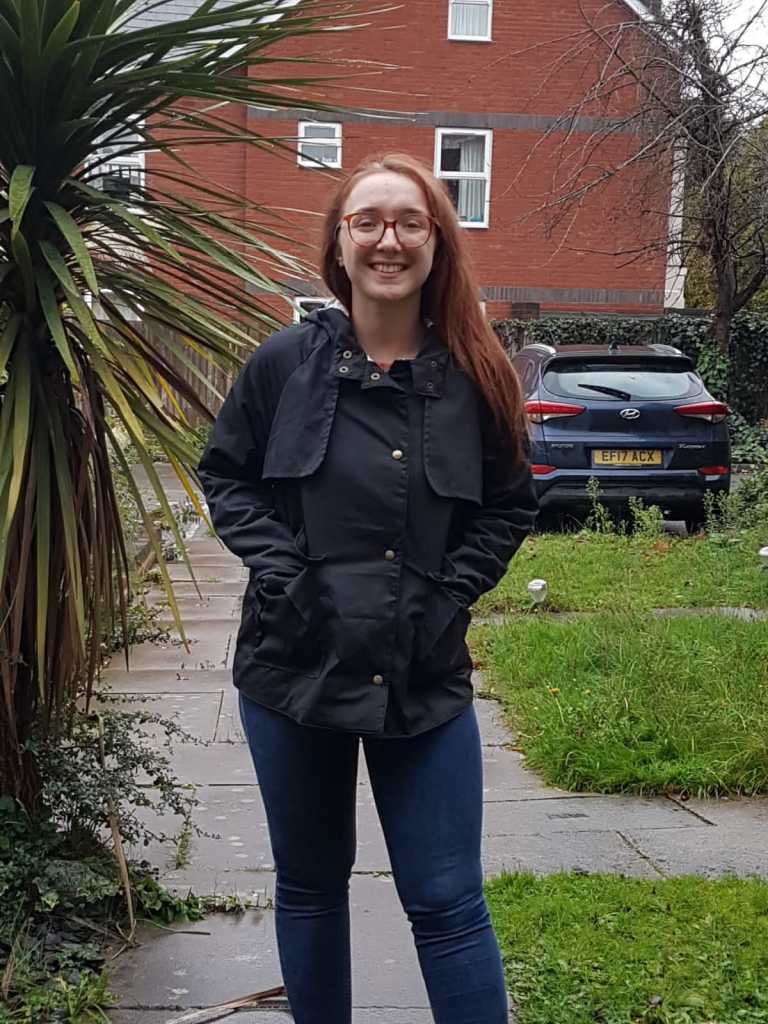
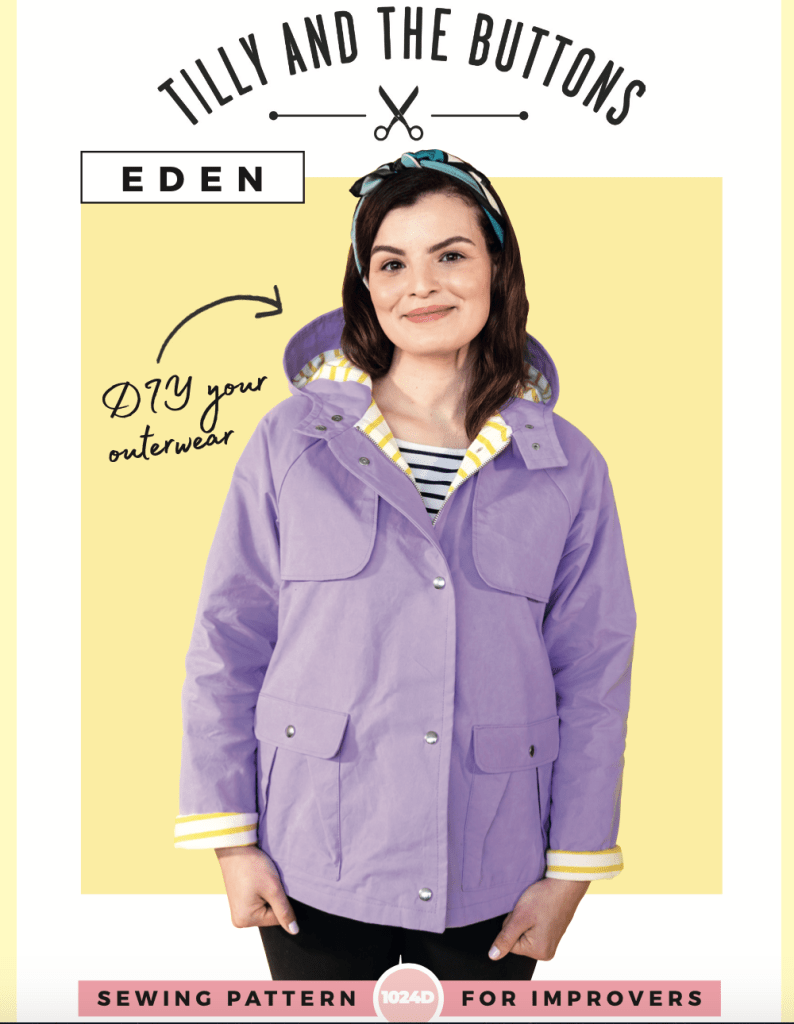
I’ve been a little bit absent on here recently due to my degree workload however if you head over to my youtube you can see what I’ve been up to for the last few weeks! In November, I finally, FINALLY, finished my Tilly And The Buttons Eden Coat. This project is by far the most complex make I’ve ever attempted and I am so proud that not only is the garment wearable but that it looks vaguely professional and its waterproof! I decided over the summer that I wanted to attempt this pattern as a present for my eldest sister so of course I had to try one for myself. I was nervous when I bought the fabric but it was also really exciting, it felt like such a big step forward in my sewing life. As I’ve always wanted a proper barbour jacket, I decided to make my coat in that style using black waxed cotton, a white floral cotton lining and brass zips and snaps. I tell you I was the most nervous I’ve ever been when I cut into the waxed cotton for the first time but it was worth it for the coat I’m now living in every time I go outside.

The pattern is labelled as ‘for improvers’ and is produced digitally as a PDF. While the pattern itself isn’t particularly complicated, there are a huge number of individual pattern pieces. The pattern and fabric cutting took a couple of hours and was mentally exhausting but after the cutting stage it wasn’t too bad. The instructions could be a lot clearer and I would like it if they were numbered and the pattern pieces were in bold when mentioned in the pattern to avoid some of the more confusing elements of the making process. Otherwise its a time consuming but not a particularly difficult sew and I had to work on it in the mornings only because the lighting in our house isn’t great and trying to sew black thread on black fabric in the evening sure does hurt your eyes! In this blog I’ve picked out a few elements that I liked, disliked and of which I feel other sewists should be aware. If you want to follow the whole making process check out my two part sew-a-long vlog linked below for more information.

Inserting my first jacket zip

Honestly I was most nervous about this step because I’d never done a jacket zip before, I’d never even sewn a zip using my new machine and new foot. So, true to form, I dived in head first and it went really well! I split the zip, placed the tape on each side and marked the top and bottom with chalk, made sure they were at the same height and went for it. I was surprised and delighted to find that jacket zips are actually quite simple and I am no longer scared of them – so thats a result!

Working with Waxed Cotton

Croft Mill have a wonderful selection of lightweight waxed cottons perfect for a ‘Barbour’ style waxed jacket. After great trepidation I was somewhat surprised to find I absolutely love sewing with waxed cotton. It’s a joy to work with, it stays where it’s put, you don’t need pins and it flows through the machine like a dream. My only advice would be to use a denim needle and if you want a 100% waterproof coat consider how you are going to seal your seams against the weather.

My First Snaps

At this point having made two Eden coats with two different snap applying methods I have a mixed opinion about snaps. My black Eden coat was my first attempt at applying snaps and it was incredibly frustrating. I used the Prym antique brass coloured snaps and the equipment that came with them to apply them and it was absolutely maddening. There is a small plastic tweezer type contraption that you fit a series of heads to and you use a hammer too apply the snaps. However using a hammer and the instructions, it took Adam and I over an hour to apply them all and it was not error free I can tell you! After this frustrating experience I bought the Prym Snap Pliers from The Makers Merchant to use on my sisters coat and they made a massive difference. I cannot recommend them enough the whole process took 15 minutes and I didn’t swear once!

Overall this coat has made me smile and its made me scream with frustration but I am proud of the result. Its surreal to look at it hung up next to my other coats for all the world as though I bought it somewhere. It’s a coat of firsts. My first snaps, my first jacket zip, my first lined garment, my first hood, my first patch pockets, my first piece of outerwear in fact! So of course there are little bits and pieces I would like to improve but its a win, a milestone and I am almost giddy with pride whenever I wear it. If you want to learn more about my making journey and process then have a watch of the vlogs below!

Follow my progress on YouTube!

Part 1:
Part 2:

Sewing Project: Super Cosy 2 Hour Pyjamas

Hello lovely readers! Those of you who live in the UK will have noticed that it has become significantly colder in the last weeks and as our heating is pretty dreadful I have shifted my sewing focus towards knits, jersey and cosy clothes. Pretty much everything I’ve made since the start of October has been made in a stretch knit or jersey, so much so that I’ve just left the ballpoint needle on the machine.

Project Details

  • Pattern: Simplicity 1563A
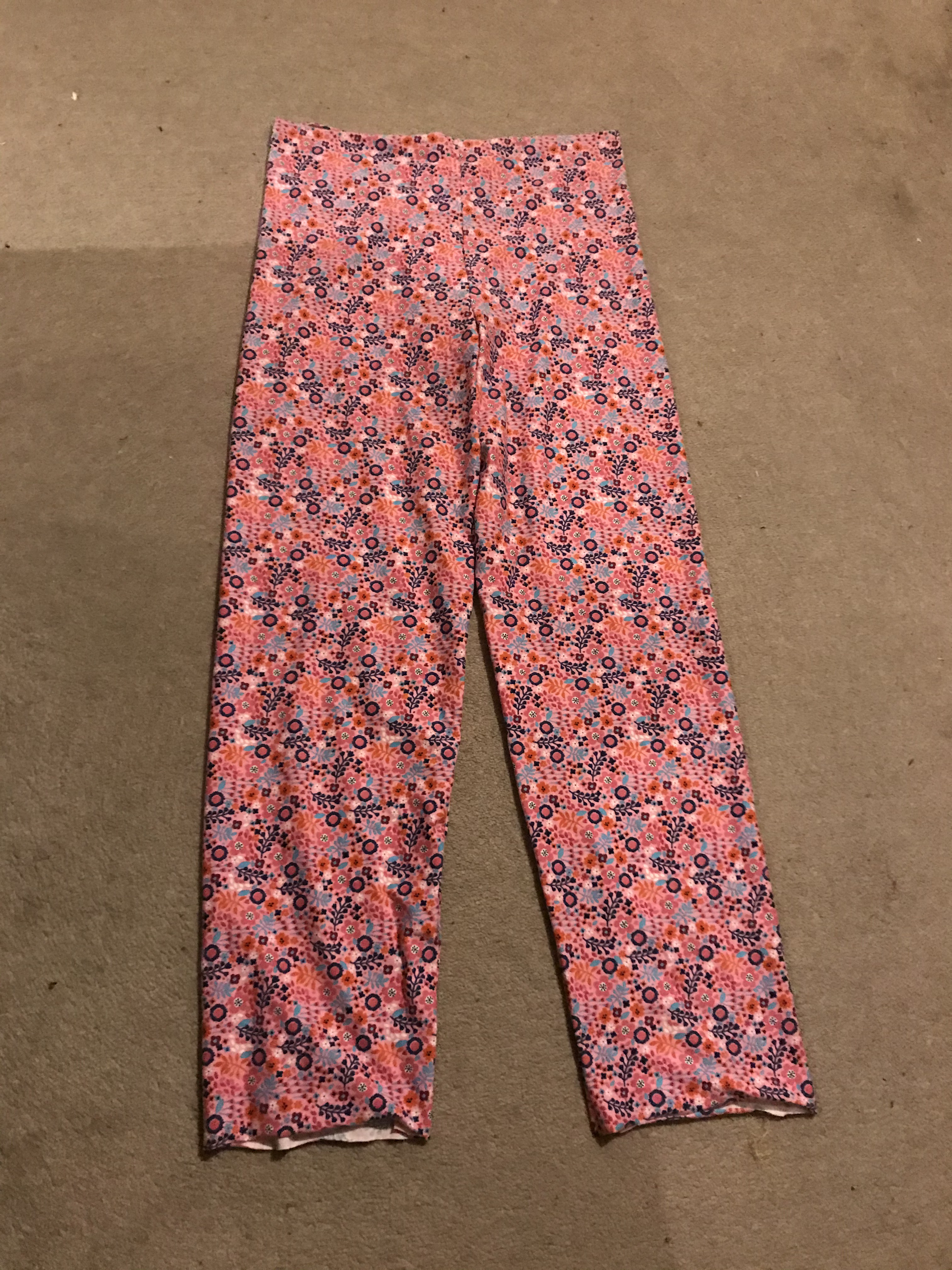
  • Trousers: Pink Floral Jersey, Sew Sew Sew
  • Notions: Already Owned
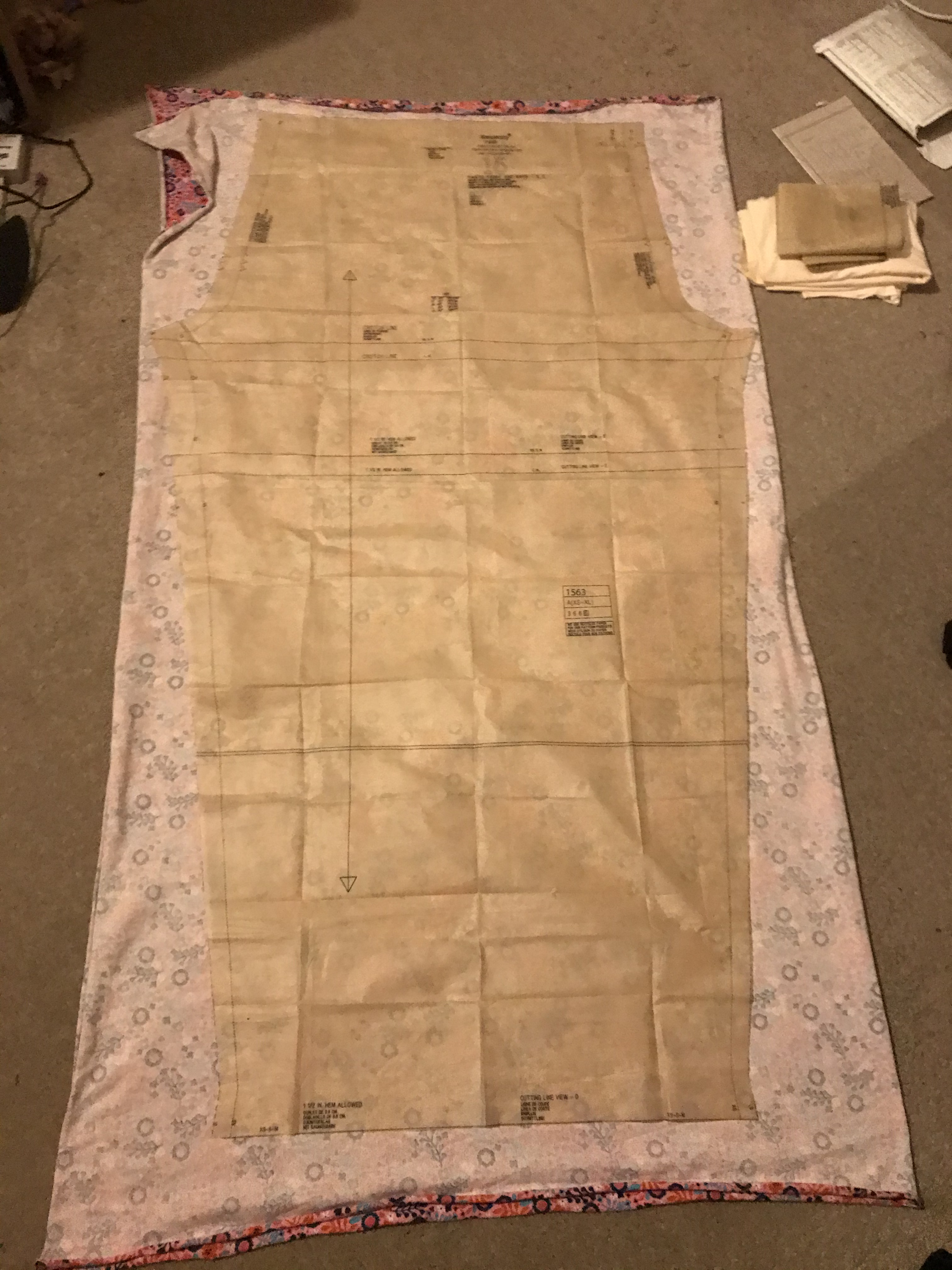
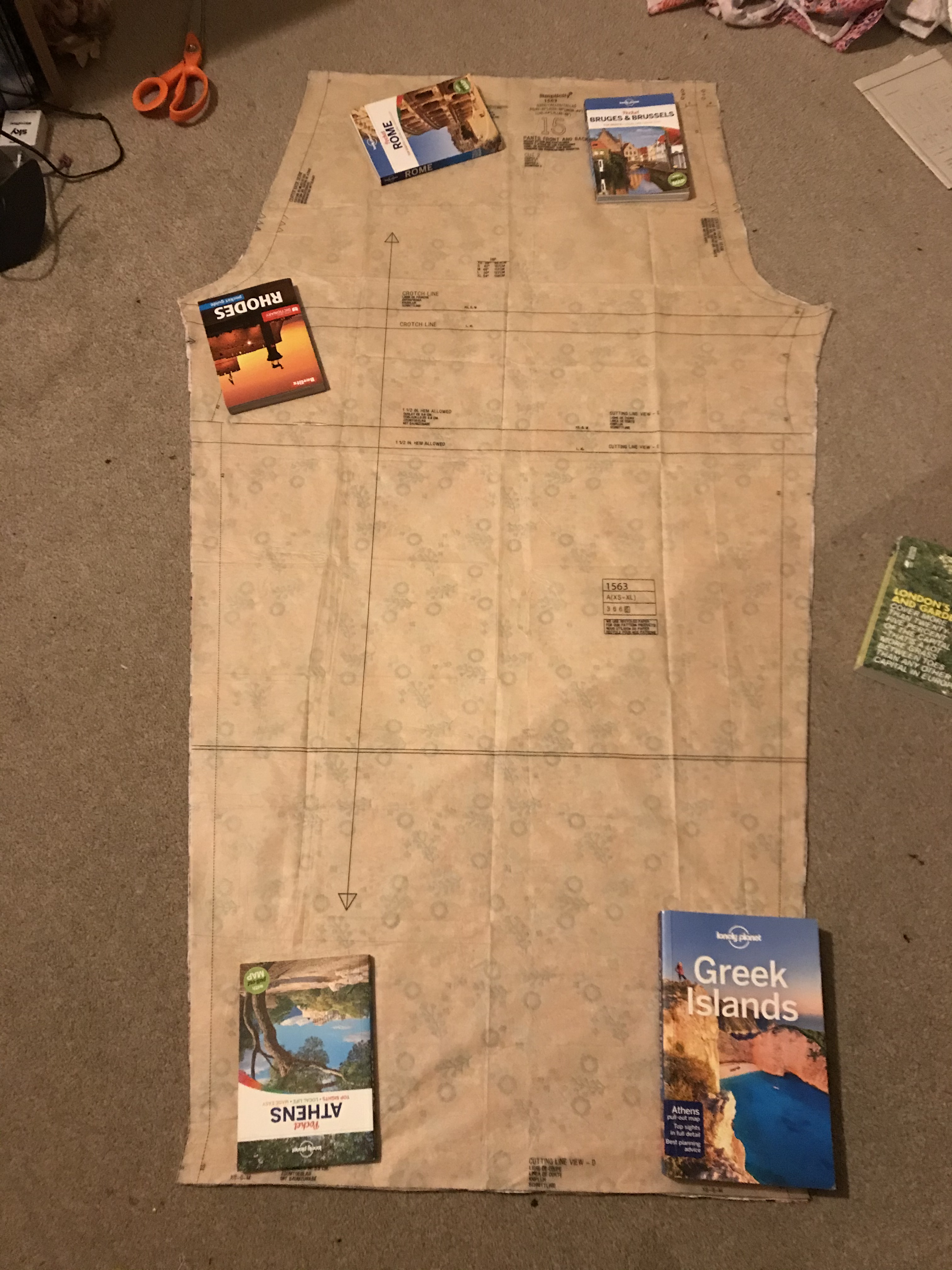
Step 1: Pattern Cutting

As this project was designed to be self-care sewing I wanted to to make sure that every step of the way was simple and didn’t require any extra thought. I actually did this pattern cutting at around 11:30pm so I just grabbed my travel guides as pattern weights and got cutting.

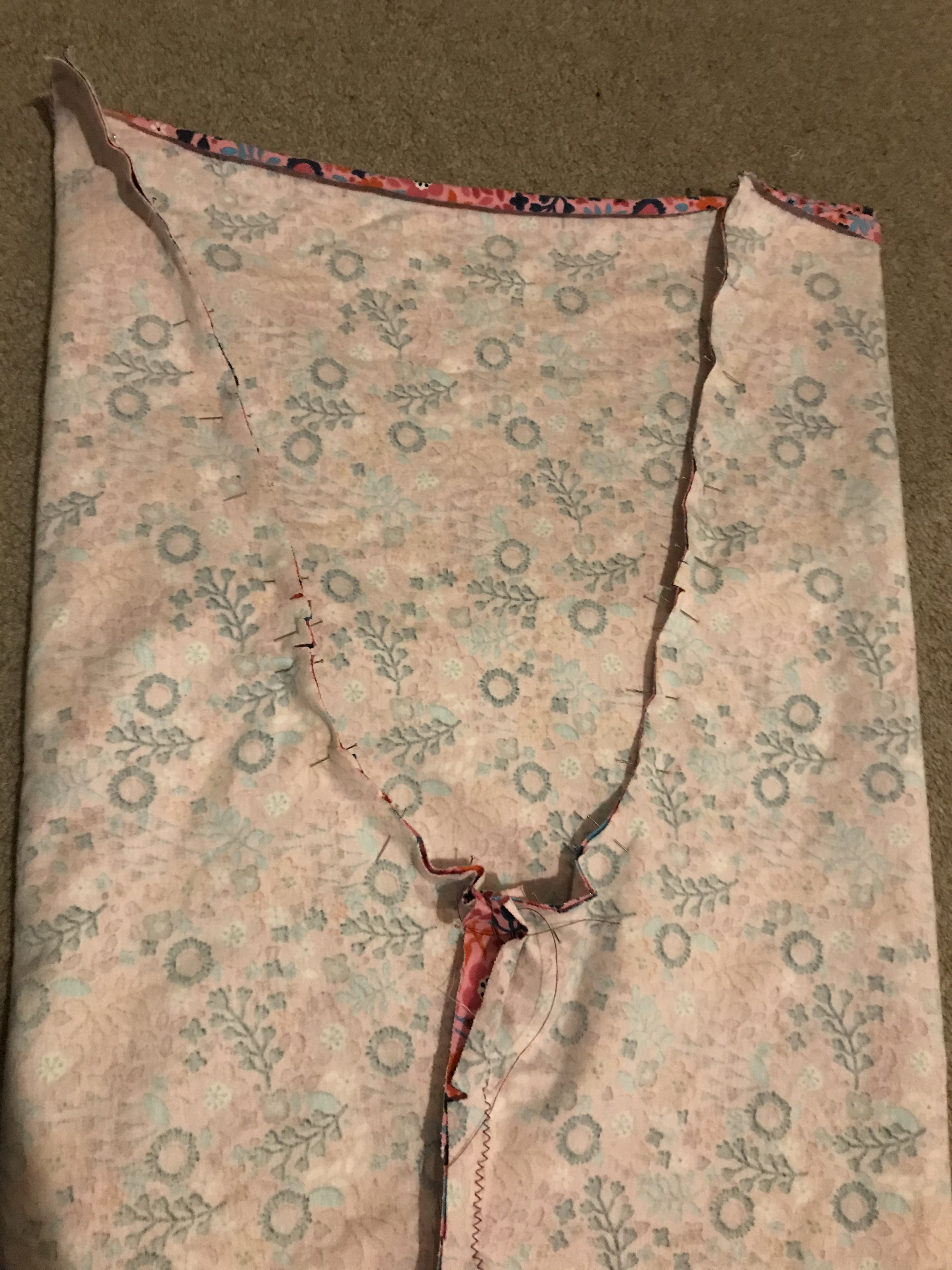
Step 2: Sew The Long Leg Seams & Place One Leg In The Other

Let me start by saying that this jersey is an absolute dream to sew, heavy but soft with a good amount of stretch, it absolutely flew through the machine. I made sure to stitch these seams with a zig-zag and then I double stitched in the seam allowance with a straight stitch. to ensure the jersey can stretch easily with sleep movement. Sew each leg together from the ankle-hem all the way up to the crotch. Then place one leg inside the other, right sides together, and sew up the crotch seam to create your trousers. Press Open the crotch seam and reinforce if necessary. I have chosen not to reinforce the crotch seam because I didn’t feel like I needed it but I may still do it in the future. I want to see how they wear.

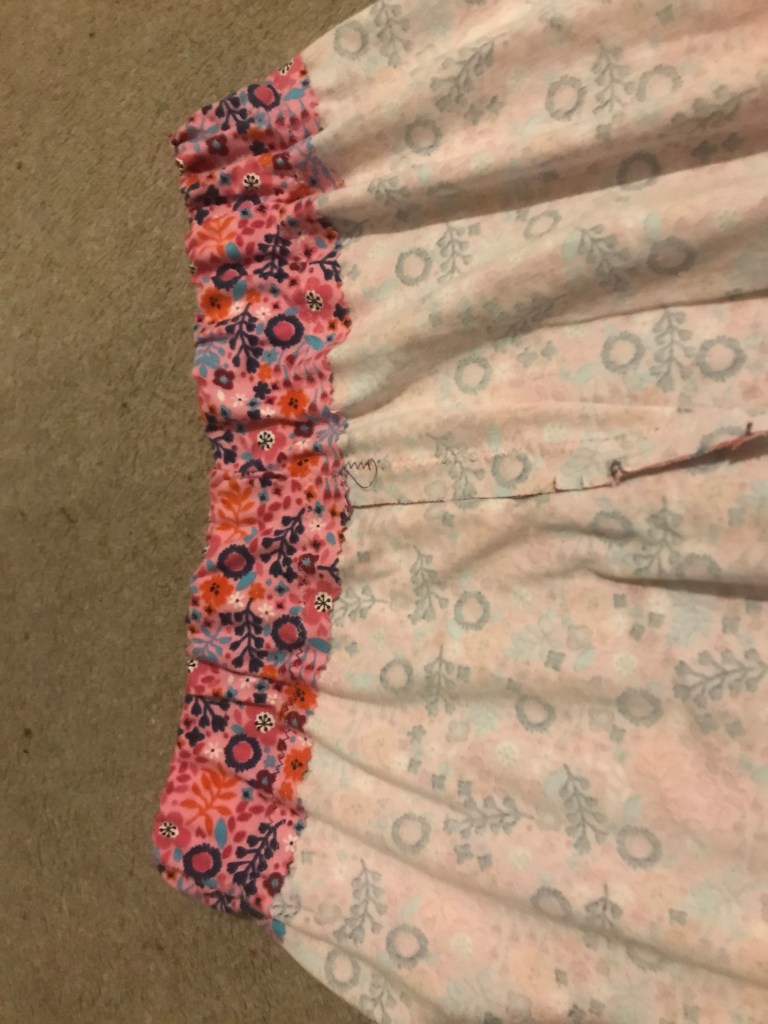
Step 3: Create The Waistband Channel And Insert The Elastic

Honestly I did this step almost completely by eye. I’ve made this pattern four times now and I know how much space I like in the waist and hip area. I sewed the waistband with a wide zigzag as well to make sure the elastic can move with the fabric then inserted very wide band elastic and made it to my upper hip/low waist measurement and then took half an inch off to make sure they fit snugly and don’t move in my sleep. One of the wonderful things about making clothes just for me is that I can work to my own tastes. Once the elastic was inserted I double stitched the waistband with a straight stitch underneath my zigzag to reinforce it.

Step 4: Hem The Trousers

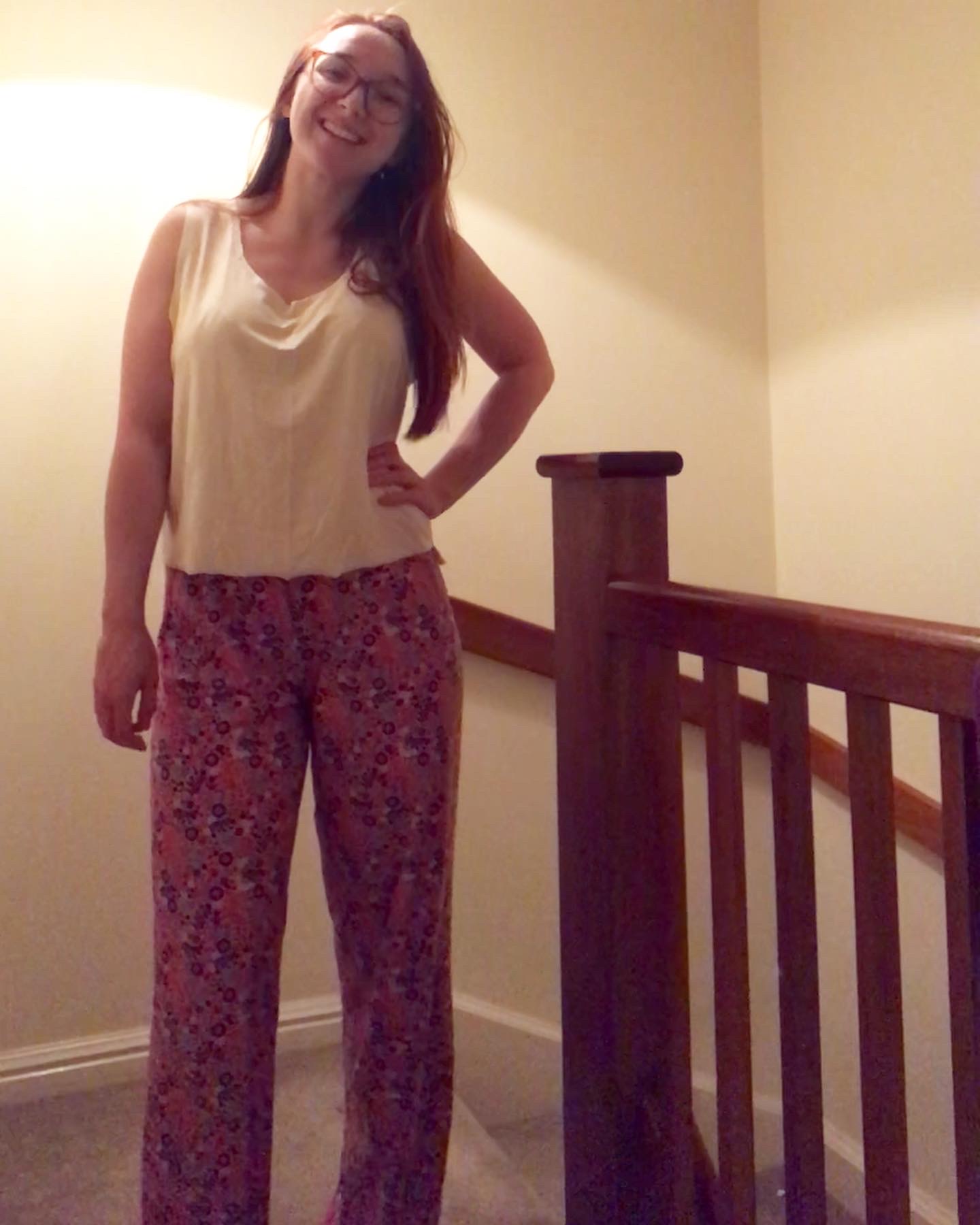
Create a simple double hem to the length you require and stitch in place. I made a large cuff because the pattern is for somebody 4/5 inches taller than I am! They are still too long for me but I really like to have them a little long so my feet stay warm in bed. I stitched the cuff with a straight stitch to fix the length in place and voila! One pair of extremely snug pyjamas. I ran up an incredibly quick tank top in a remnant of viscose jersey. I just sewed the side and top seams and then stabilised the neckline. Nice and easy and they are possibly the most comfortable pyjamas I’ve ever owned!

Why was this project so important?

I don’t normally put this bit at the end of a project blog but I wanted to say a word for selfish sewing. Do it. Sew something for yourself, especially if you commercially sew for others. Take a moment to think about something you want, you really want. Whether thats a garment you need or something you’ve always wanted to buy or you just need some time to yourself, sew something for exclusively for you. I’m having a stressful time at the moment with a full time job, a part-time degree, teaching yoga twice a week, driving lessons and sewing is the only thing giving me time to just breathe. These pyjamas took me less than an hour but they might be my favourite make because they are only for me and for the house. They are officially my self-care pyjamas because we all need those clothes that help us relax. Now I’m going to slip into my cosy pyjamas and get into bed with a good crime book!

See you guys next time x

Monthly Magazine Make: Boxy Blouse and My Very First Yoke!

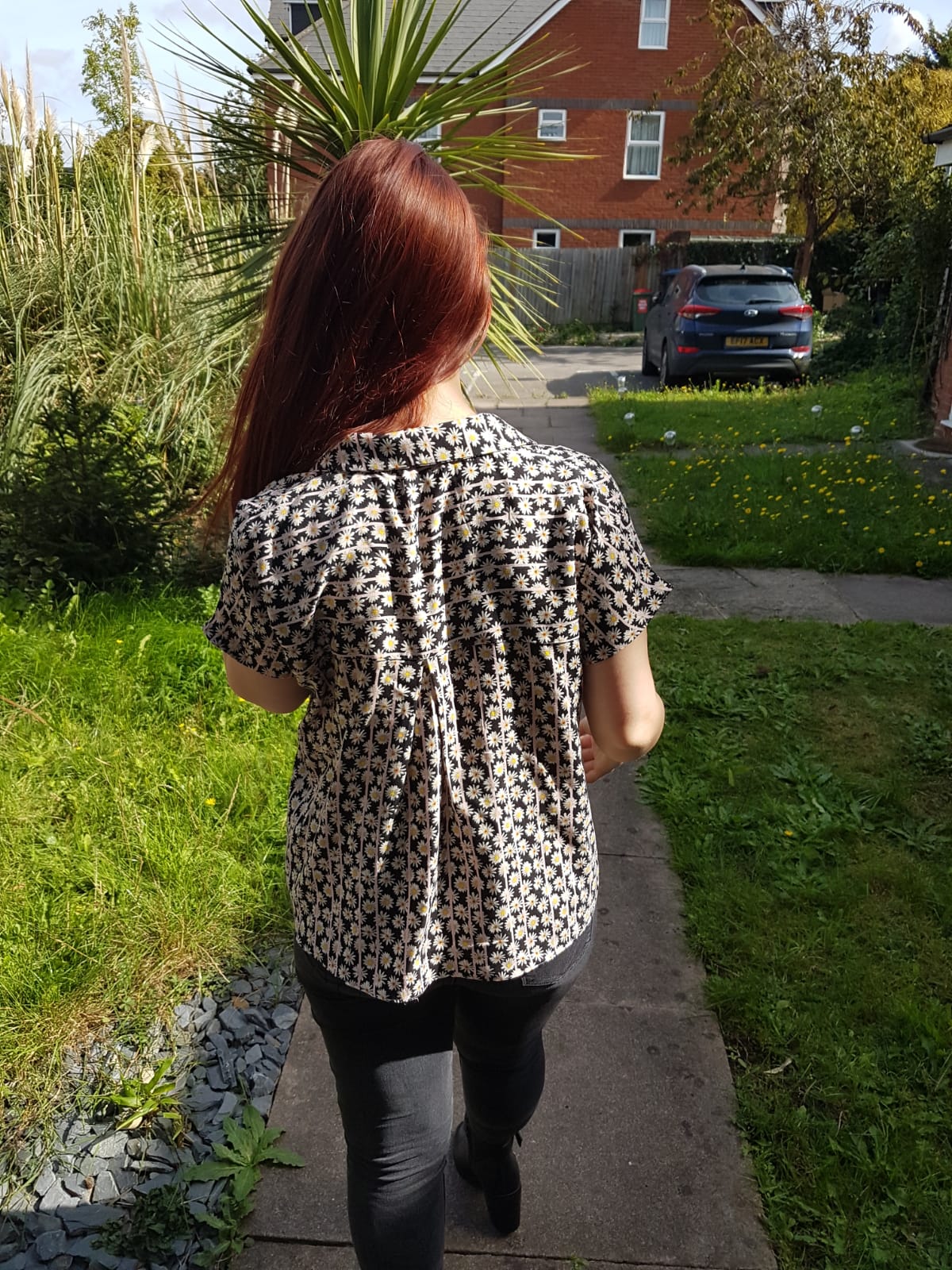
This is my first detailed project blog for a while but here I am to talk to you about this month’s make chosen from my copy of Love Sewing magazine. I only started my subscription last month but I already love it, I love how many free patterns you can access and its always super interesting to hear from other makers, experts and amateurs alike! The second I saw the My Handmade Wardrobe Boxy Blouse from Crafty Sew & So I had to make it. I love shirts, I love the silhouette and having just bought a machine almost purely because of its incredible buttonhole functionality I was desperate to sew buttonholes. A sentence I’m sure no one has said before. Whilst containing some familiar elements such as collars and buttons this pattern also contained a little challenge in the form of my first ever yoke.

In the spirit of the New Craft House #sewyourselfsustinable challenge I decided I would use a deadstock remnant I had left over from another project, my gorgeous daisy patterned viscose from Rainbow Fabrics Kilburn, and I used the rest of the pink shell buttons from my fish dress earlier in the summer. So not only was this project super fun but it didn’t cost me a thing, well apart from the cost of the magazine but hey you can’t have everything. I have also been a little under the weather due to personal health issues and I felt this project was the perfect way to get my sew-jo back.

Project Details

Step 1: Pattern Printing & Cutting

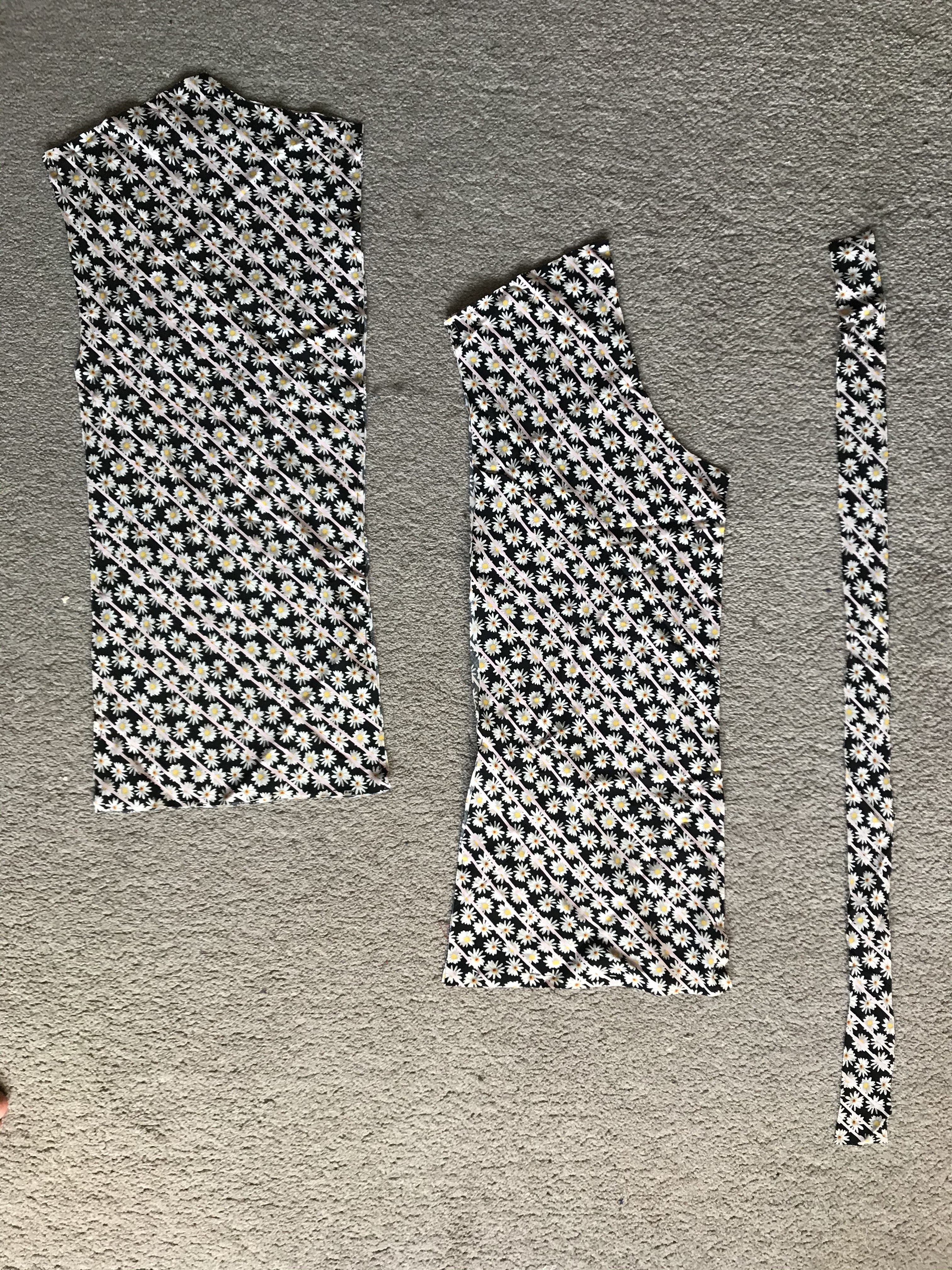
I printed the whole pattern on my printer at home which means that the pieces probably aren’t perfect but they were as good as I could get them! Still it is quite fun to be able to print at home and start straight away. My fabric layout wasn’t as efficient as it could have been but I wanted to make sure the stripes would be evenly lined up on the shirt.

Step 2: Create The Box Pleat In The Back

I liked this as a first step because I love a box pleat and it felt cosy and familiar. They are easy to make and so satisfying to look at afterwards. I’m not going to explain this step really as its clear, follow the markings and make a box pleat in the back panel, but here is a picture of mine as I do just love them.

Step 3: Create Your Yoke

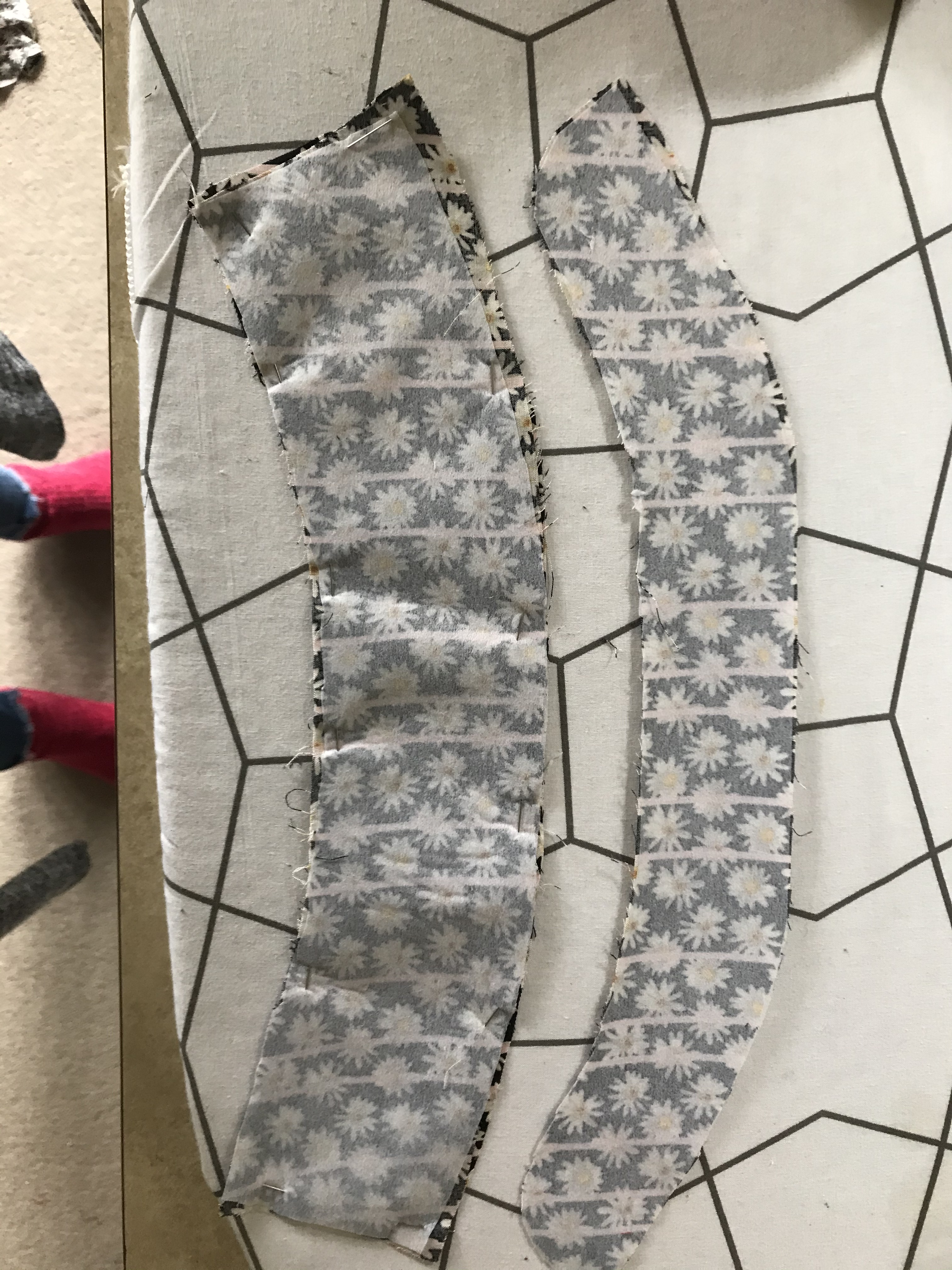
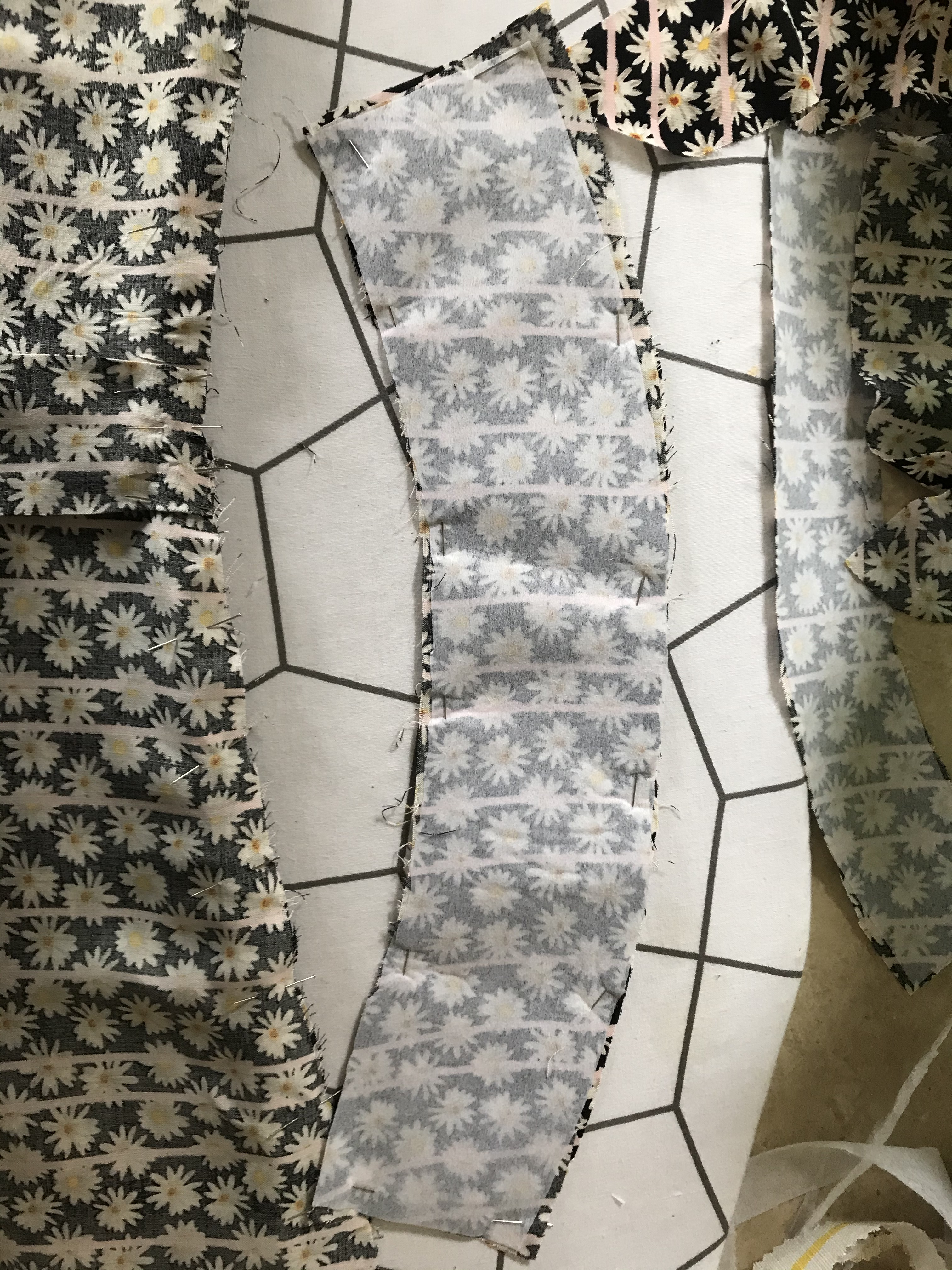
It was at this stage I realised that I did not have the correct yoke pieces. On the pattern piece it does not tell you to cut the yoke on the fold, it just tells you to cut two pieces. The cutting layout in the magazine is also incorrect. Having never done a yoke before I naturally followed the instructions and cut two individual halves of the yoke. It was only when I got to the assembly stage that I realised something was extreme wrong. Luckily I managed to squeeze another yoke piece out of my remnant however I couldn’t cut a second one so you will see that my inner yoke is two pieces sewn together and my outer yoke is one continuous piece. It wasn’t a huge drama as luckily I had just enough fabric left but it is definitely worth flagging that you must cut two yokes on the fold rather than just two pieces as the pattern piece states. Once you have got the correct yoke pieces, attach the back pleated piece to the base of the yoke with pins and then roll it up. Then attach the fronts of the shirts to the shoulder seams again with pins and roll them up until you end up with something resembling the first picture below. You then place your second yoke piece on top to create something that looks like a calzone.

Step 4: Stitch The Seams & Pull Through

As this was my first time using the burrito method I was understandably nervous, I kept thinking to myself ‘surely this won’t work’ and yet! As long as you roll the fabric pieces nice and tightly inside and leave the seams flat you can stitch along the shoulders and back seam et voila! You reach through the neck and pull out your finished garment. I was absolutely enthralled by this process and proceed to bore my partner for a good 10 minutes with my utter amazement at this technique. He was actually very sweet and listened to me far longer than he had to but I was extremely excited about it.
Step 5: Create Your Button Plackets

This is a simple step and yet… I was quite tired by this point so accidentally pressed the placket to the right side instead of the wrong side, luckily I realised and was able to fix it quickly. You fold the placket 1.5cm to the wrong side, then again and stitch down the open side. To make this easier for yourself make sure you cut the notches on the neckline as they show you the distancing.

Step 6: Create & Attach Collar

Having really struggled with my last collar it almost felt like seeing an old friend when I started to cut out the pieces. I interfaced them with medium weight interfacing because honestly its all I had in the house and i reasoned that as my fabric was so lightweight it probably needed the extra weight and honestly it helped significantly, I don’t think the collar would have stood up correctly otherwise. However I did have one issue stitching on the collar, on the pattern pieces it said to use a 1.5cm seam allowance when stitching them together which I did however when I came to attach it to the garment I found that the collar was at least 1.5cm short on each side. I really had to snip into the neckline and do a lot of easing to get it on. It really isn’t my neatest collar but thankfully the colour and pattern of the fabric hide it. Next time I will reduce the seam allowance massively but otherwise the instructions were very clear and easy to follow.

Step 7: Side Seams & Finish Raw Edges

At this point its a nice simple finish for the side seams, I stitched them at the 1.5cm seam allowance and then used my overlock stitch on my machine to finish the edges. If you have an overlocker you could probably just overlock them but either way, a simple finish, then I used a rolle hem on the end of the sleeve and on the bottom hem of the shirt. I used a rolled hem for two reasons, firstly speed but secondly because I am working with a very lightweight, almost diaphanous, viscose and I didn’t want the hem to sit too heavily.

Step 8: Buttons & Buttonholes

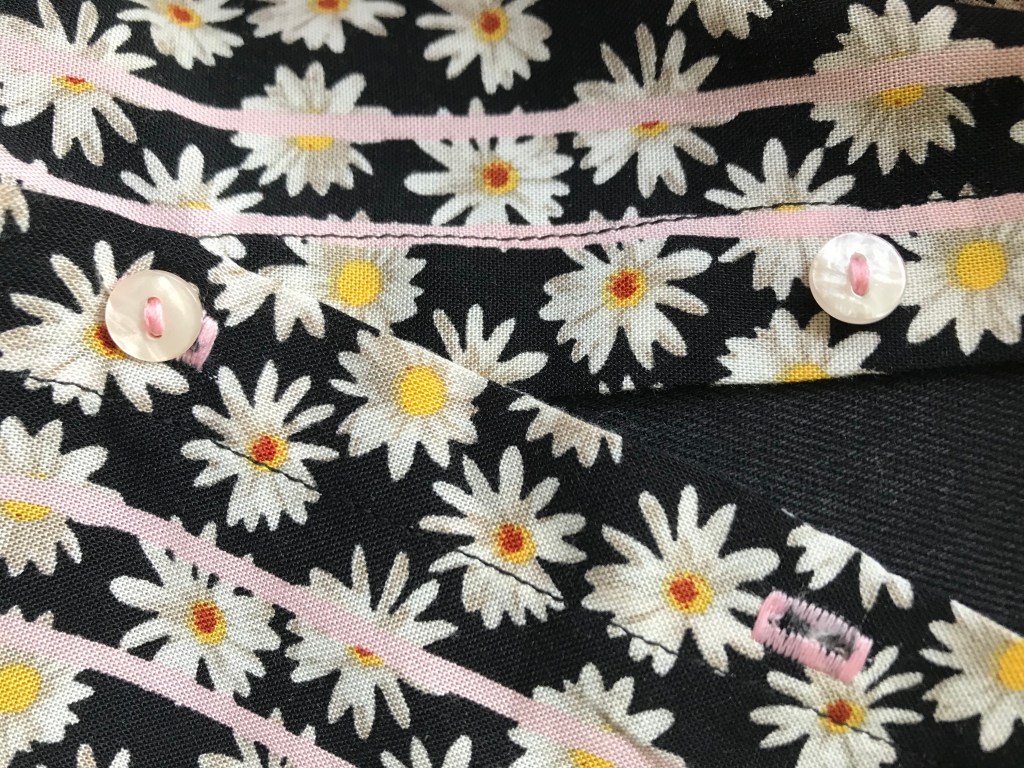
For once I was absolutely itching to get to this stage because the buttonhole function on my new sewing machine is genuinely phenomenal. I have a Singer Starlet 6680 with a 1-step buttonhole function. Its got the cleverest buttonhole foot, like an enormous frame that measures the size of the button then creates the right sized space for the needle to sew a perfectly fitting buttonhole. I was so confident in this function that I actually used contrasting thread and used a thicker buttonhole to show them off. Not only did I have a great time sewing the buttonholes I also machine sewed my buttons on for the first time ever! My lovely new machine came with a plethora of feet that I am only now getting time to experiment with. the buttonhole foot is absolutely excellent and saved me a huge amount of time as well as saving my eyes from strain. I am beyond chuffed with the result and it was a super fun way to finish off this garment.


What I love about this pattern is that it is challenging and yet simple. On the one hand you are attaching a collar which can be tricky and you have buttons and buttonholes to worry about, on the other, there are no sleeves to worry about and all the finishes are pretty basic. It’s a bite sized amount of challenge and a fantastic project for beginners who want to branch out into new techniques. I wouldn’t hesitate to recommend this pattern to every beginner anywhere, its fun, the instructions are simple, the garment is eminently wearable. My only caveat would be that the cutting instructions could be better, as I mentioned above the cutting label on the yoke piece was downright incorrect, but despite that I would still recommend this pattern as a fantastic introduction to collars, buttons and shirts.

My Top Tips To Sew Your Own Amaya Shirt

As my YouTube subscribers will know, I have just finished making the Amaya Shirt from Made My Wardrobe. Today I am mopping up, resetting my machine and trying to sort some other little projects/alterations/fixes which have been piling up for a while now. However, before I completely forget how I made it I wanted to share my tips, tricks and honest feedback on my making journey for the Amaya Shirt.

Firstly, here it is in all her gorgeous, flute-sleeved glory. Honestly I would never have thought of making this pattern originally, it was very much the case that the fabric came first. I bought this stunning red spot cotton from The Rag Shop with no clue at all what I was going to make with it. For transparency I almost never do that, I’m always very project lead but I thought, you know what? I’ve got to have it. When I posted about it online and asked for recommendations Steph from The Rag Shop got in touch and suggested the Amaya Shirt. I was intrigued and although its a little out of my comfort zone fashion-wise I decided to take the plunge.

It also took me out of my technical sewing comfort zone. My first proper top stitching, my first raglan sleeves, it was all a journey and I really made myself take my time. Especially as I knew that I didn’t have enough fabric to recut if I made a mistake. I’m really glad I took the time, doing only one or two pattern steps a day for a week. It was a lovely way to wind down from work each day and I feel like this is technically one of the best garments I’ve made because I didn’t rush a single step. So my first and biggest piece of advice I can give you is to take your time with this make, there aren’t many steps but they all require accuracy and care. Below I have linked my vlog so you can join me for every step of the sew and you can also see just how many grey jumpers I own as I change between days.

My Top Tips:

  • Draw The Line For The Front Opening – seriously, do this. I thought I wouldn’t bother but it requires a straight line stitched 4cm in from the edge which is surprisingly hard to do by eye and most machines don’t have markings that go out that far. This was made extra difficult on my fabric as its exceptionally hard to draw a straight line on Swiss Cotton! Regardless draw a solid or dashed line, its worth it for a garment feature that is so front and centre.
  • Really Press The Centre Front Open – While we talking about the centre front…before you start top stitching you absolutely must press it open thoroughly so that your facing and seam doesn’t bulge when you do the top stitching.
  • Finish All The Edges As You Go – Cards on the table, I’m straight up awful at finishing raw edges when I sew, honestly just awful, but I really made the effort with this garment partly because i didn’t want fraying but mostly because it actually really helps with the structure and the strength of the seams. I am particularly highlighting this as something you should as you go along because there are quite a few seams you can’t access once the garment is done if you were hoping to have a tidy up at the end. The pattern recommends overlocking but if you don’t have an overlocker then either you can zigzag or you can go on a voyage of discovery with your sewing machine and find out that it actually has four different overlock stitch options. (It’s the dream)
  • Gather Much Closer To The Neckline Edge Than You Think – Basically if you look at the outside of my garment the bind covers all the gathers, that is quite emphatically not the case on the inside. I did my gathers at the distance recommended by the pattern, or at least i think it did as I work in imperial and it only had metric, but at that distance it was impossible to enclose the gathers properly in the neck binding on both sides. So I would recommend sewing one row in the seam allowance and then other just beyond it. You will still be able to gather and you will be able to enclose both sides in the binding.
  • Go By Your Measurements – so I looked at the finished pattern measurements and was going to make a size down as they looked huge but when I looked at the body measurements I saw that they actually put me in the 10 bracket. I decided to go with the 10 because I would rather it fit my bust properly and then i could adjust other areas but actually i found it to be a really nice fit. its loose but you actually have enough room to move and the sleeves and bust line are both really flattering. My recommendation would be to pick the pattern based on your bust size and then work from there.
  • Print Out The Pattern Instructions And Highlight – For me the pattern instructions required a second and even a third reading as I found the prose of the instructions very unclear. That could just be me but if you do have the same issue I would recommend printing them out and highlighting the action areas just for the sake of clarity. The pattern makes a stunning garment but the instructions could be easier to understand.
  • Use A Fairly Structured Fabric – It really helps with the construction and the fit of this garment. I’m sure you could easily make it out of more slippery fabrics but I think a structured cotton, linen or chambray would be a good starting point for a first make of this garment and would show off its more flattering and exciting features.

Those are my top tips for working with this pattern, its a great pattern and I have worn mine loads since I made it so I would recommend it for all abilities. Check out my sew-a-long vlog below to see how I got on making the Amaya Shirt.

Sewing Project: Bias Cut Top – My First Attempt At Pattern Matching

My last project before I went away was a bias cut chevron top. This garment falls into the category of a simple yet deceptively difficult make. Now of course there aren’t many difficult techniques of garment construction involved, what makes this difficult is a) pattern matching and b) working on the bias.

Project Details

  • Pattern: Bias Cut Top, GBSB From Stitch To Style
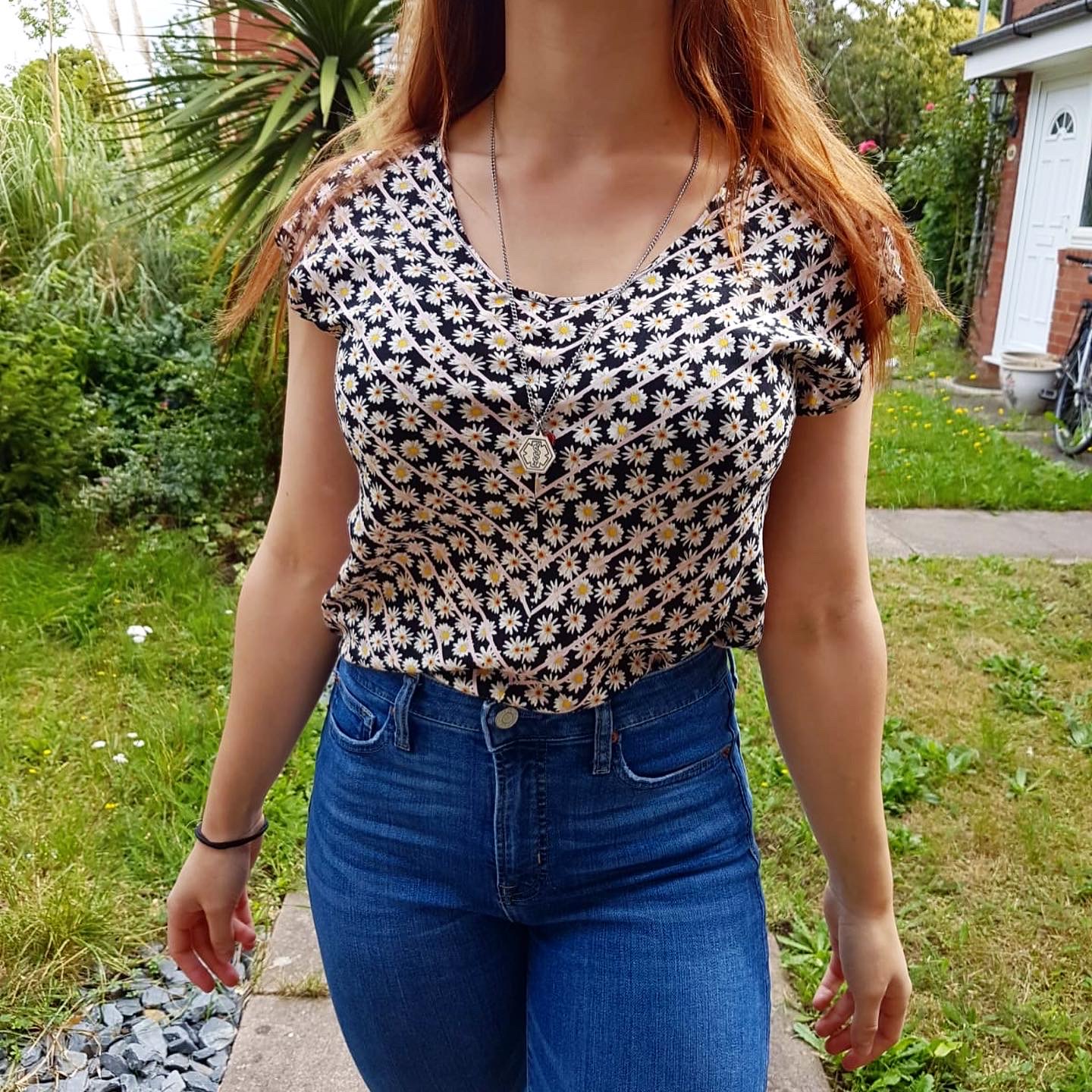
  • Fabric: Daisy Striped Viscose, Rainbow Fabrics Kilburn

Step 1: Pattern Cutting

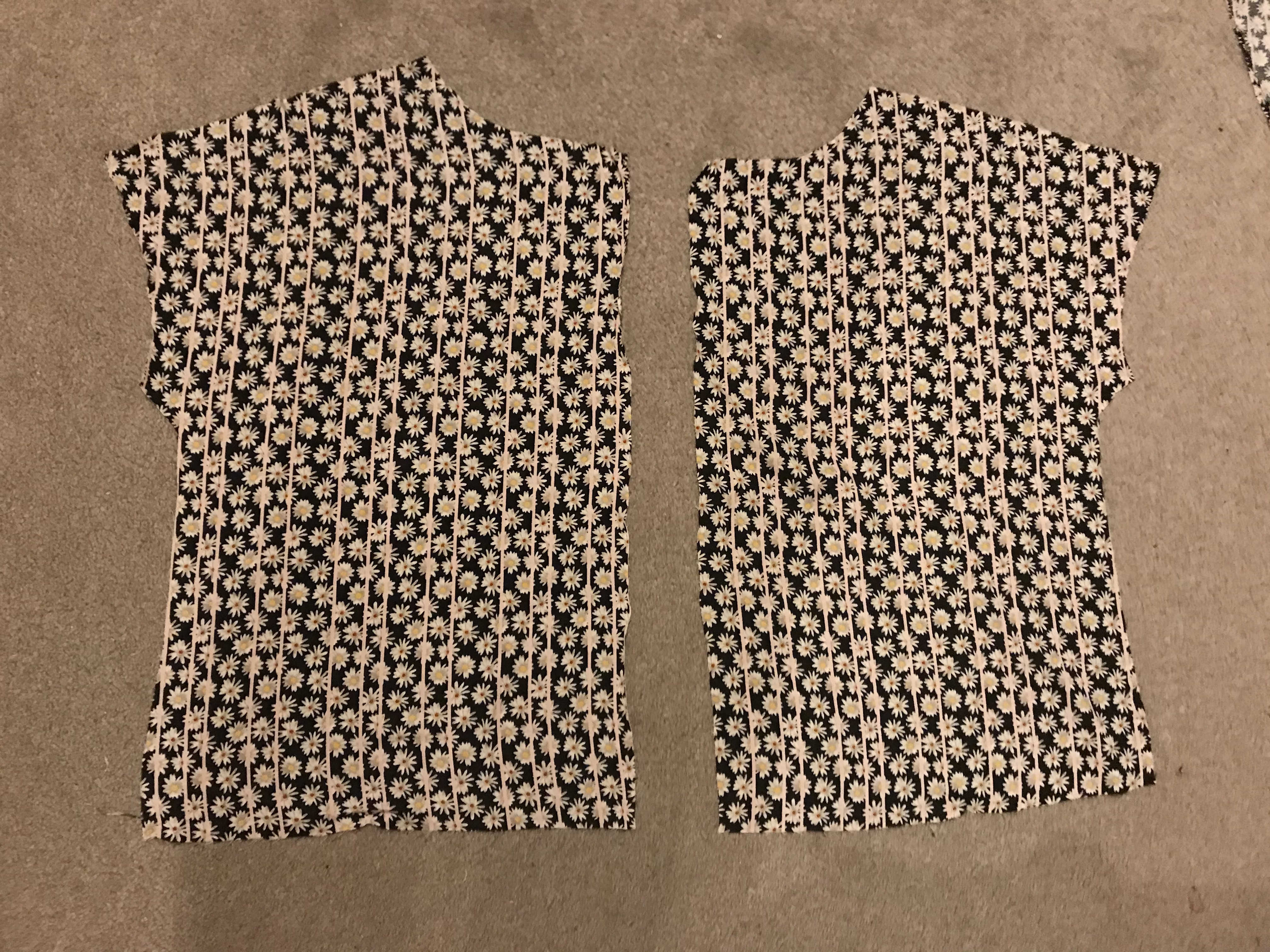
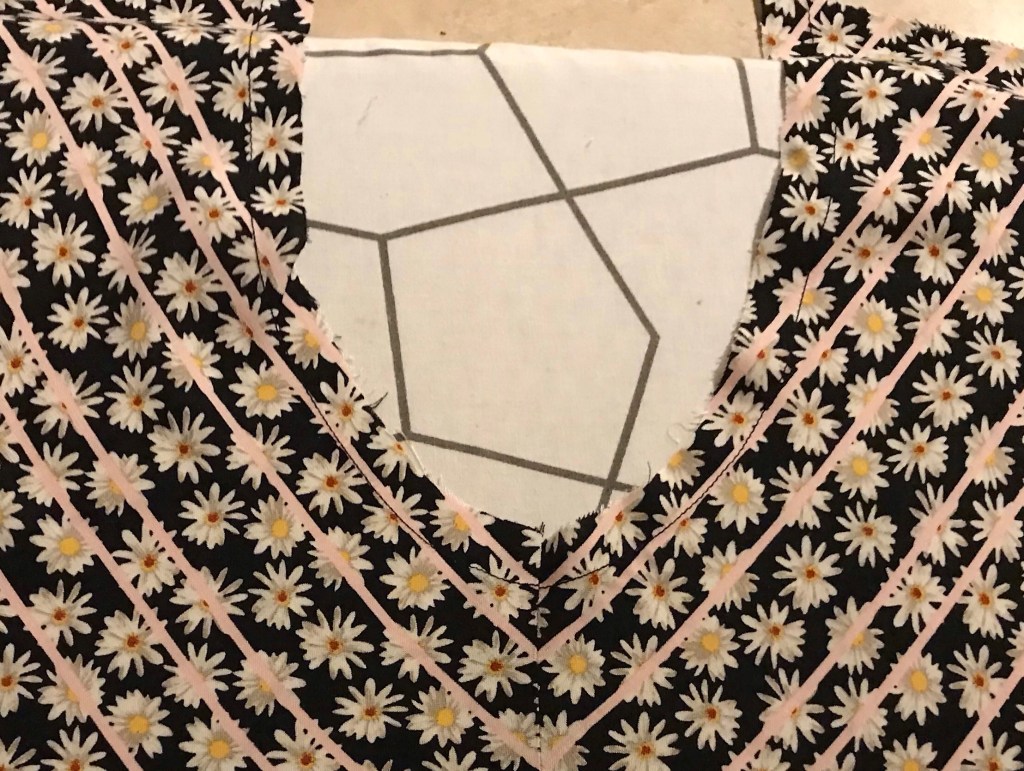
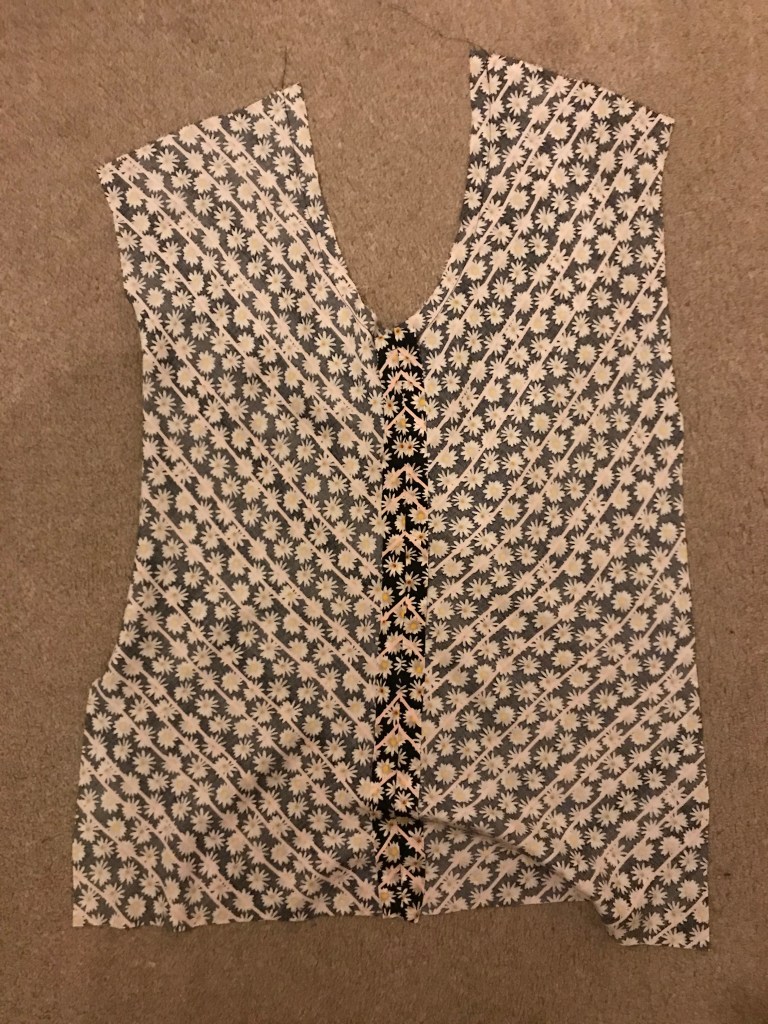
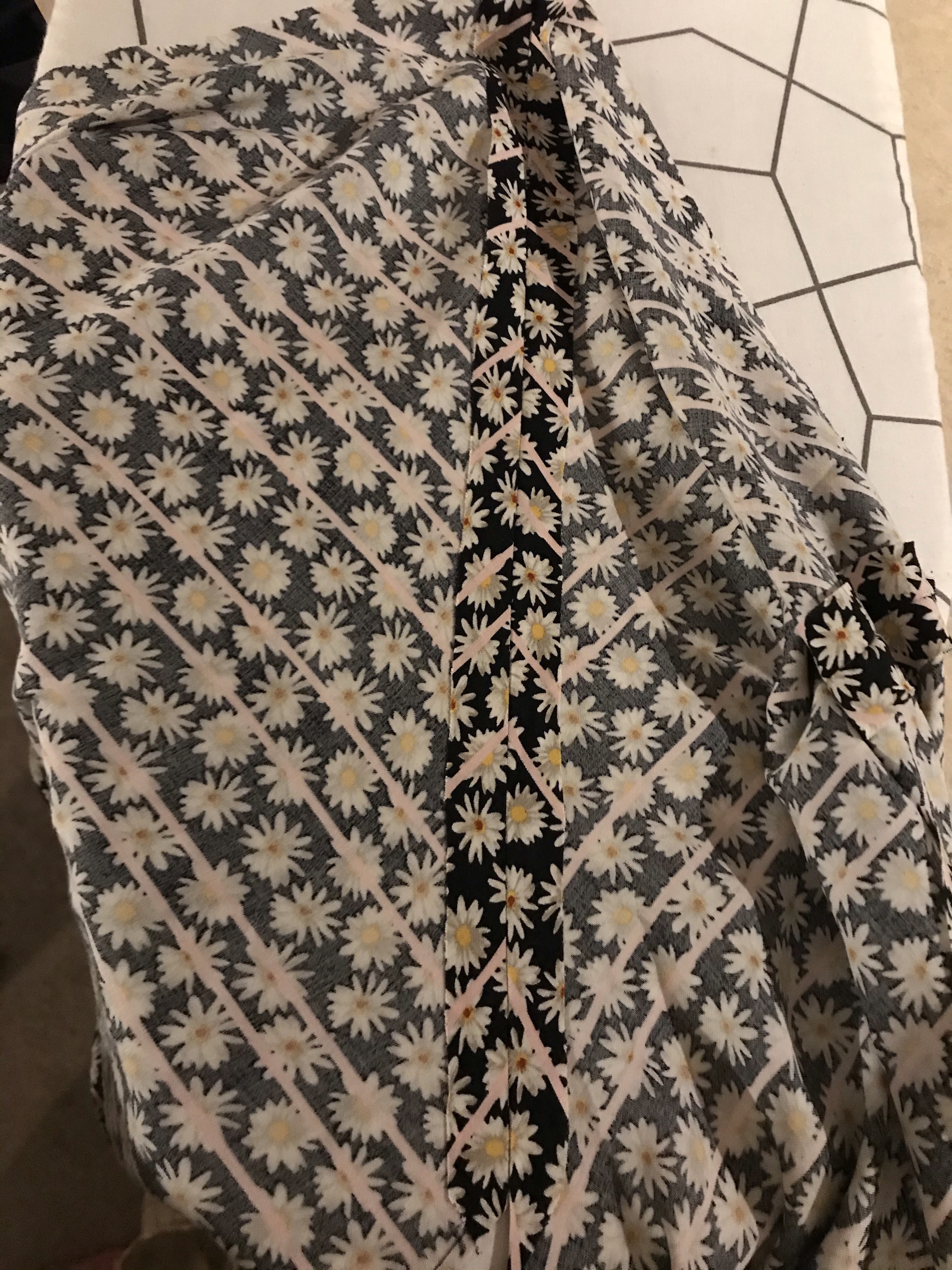
I kid you not it took me well over an hour to cut these pattern pieces and it was nerve wrecking. The aim of this garment was not only to create a top on the bias to create a chevron pattern from my striped fabric. On top of that, as you will see from the fabric below, I made things even more difficult for myself because my stripes were not even. They are in groups of diffident widths and numbers so matching to an incredibly long time. To pattern match a chevron on the bias you need to cut your pattern pieces at right angles diagonally, and honestly I used my first pattern pieces cut my second to ensure the match. Eventually I gained enough confidence in my matching skills and cut my pieces but it really was a learning curve. Pattern matching is something I’ve avoided for years because I didn’t think I could do it but this garment has increased my confidence and shown me that I shouldn’t be scared of new techniques! Everything is a chance to improve.

3 Things I’ve Learnt About Pattern Matching
  1. It takes TIME. Seriously it took me an hour to cut out my pattern pieces because I spent so long making sure that the stripes lined up. I made things even more difficult for myself than I realised.
  2. Iron your fabric beforehand to make sure that you can match accurately and remember to include your seam allowances.
  3. Transfer your directional markings on to the pattern pieces, it’s such a help when pattern matching on the bias and particularly when you are creating a chevron.

Step 2: Stay Stitch The Neckline

As always an incredibly important step but no less so when working on the bias as you want to make sure that your garment doesn’t warp. At the time I felt like Ihad done this well but afterwards I realised that it wasn’t my best work. This is entirely because I went to fast and allowed the viscose to slip and slide all over the place as it often does. Even more so when working on the bias. In fact this project has made me reflect on how rarely I cut anything on the bias. One of the wonderful things about this project is that it has helped me to understand my fabric better and the literal mechanics of fabric use.

3 Things I’ve Learnt About Working On The Bias
  1. There is a lot more mobility that you think there will be. Even in stiff fabric the bias still provides a lot of stretch so just imagine how I was working with a slippery viscose. I had to handle the fabric incredibly carefully to ensure it didn’t warp as I sewed it.
  2. If you’re pattern matching on the bias use a lot of pins and sew slowly. Louder for everyone at the back. Sew slowly, sew carefully, keep both hands on the fabric and match carefully as you go.
  3. Cut a single layer of fabric at a time and if possible use a rotary cutter and mat, this stops the fabric from shifting or stretching when you cut it.

Step 3: Centre Seams

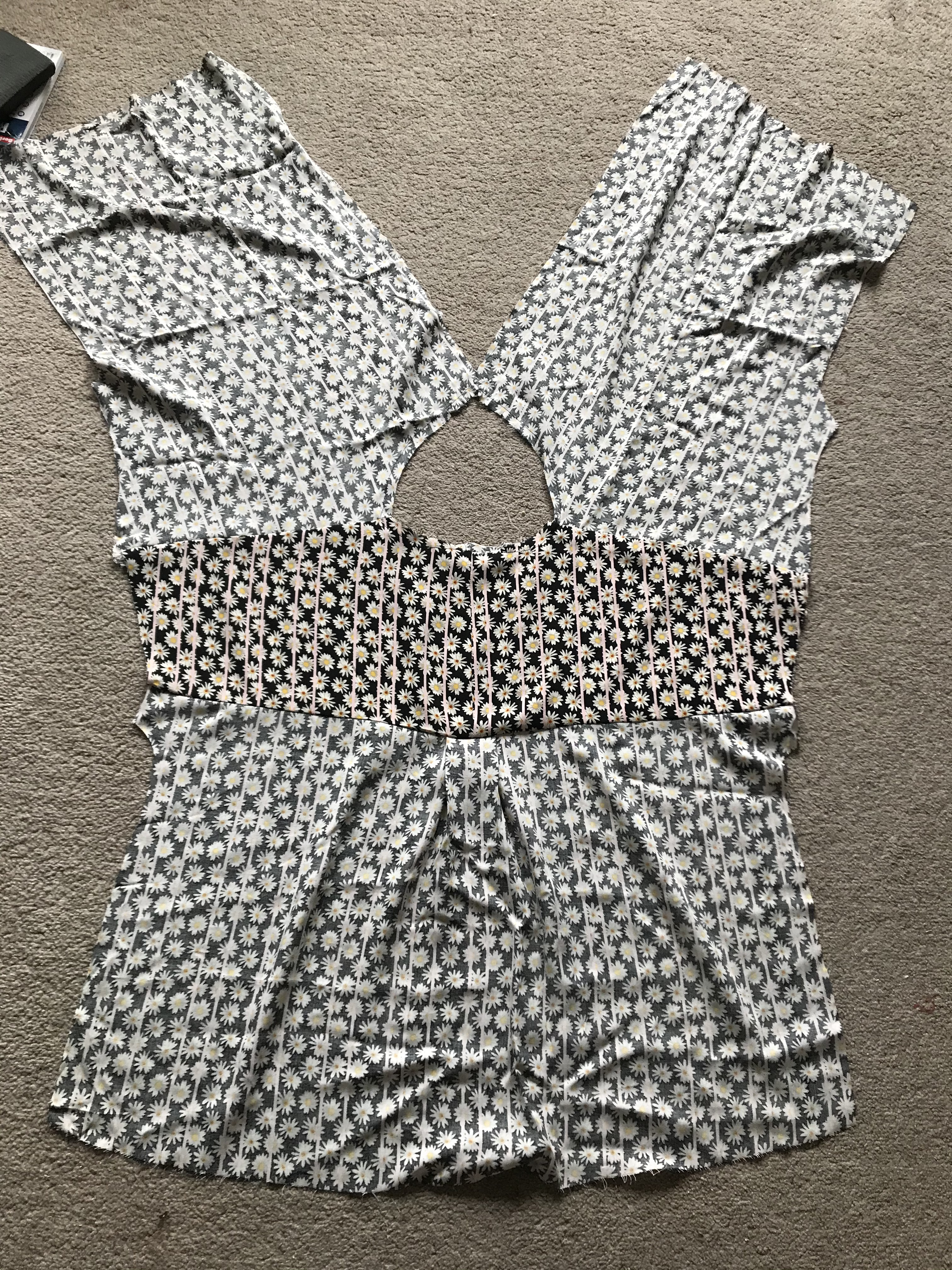
Take your time matching your front and back centre seams and sew slowly with control. Make sure your machine doesn’t pull the layers of fabric apart at all and continue to check the match as you go. I went so slowly and carefully at the time I had to keep reminding myself to breathe but the sense of relief when I finished sewing and took it over to the iron was unbelievable. Remember to sew the back just as carefully at the front and if you want one tip, especially for matching chevrons, start sewing the seam from the top of the garment down, this makes sure that if anything does move it won’t spoil the finish at the neckline.

Step 4: Shoulder Seams & Side Seams

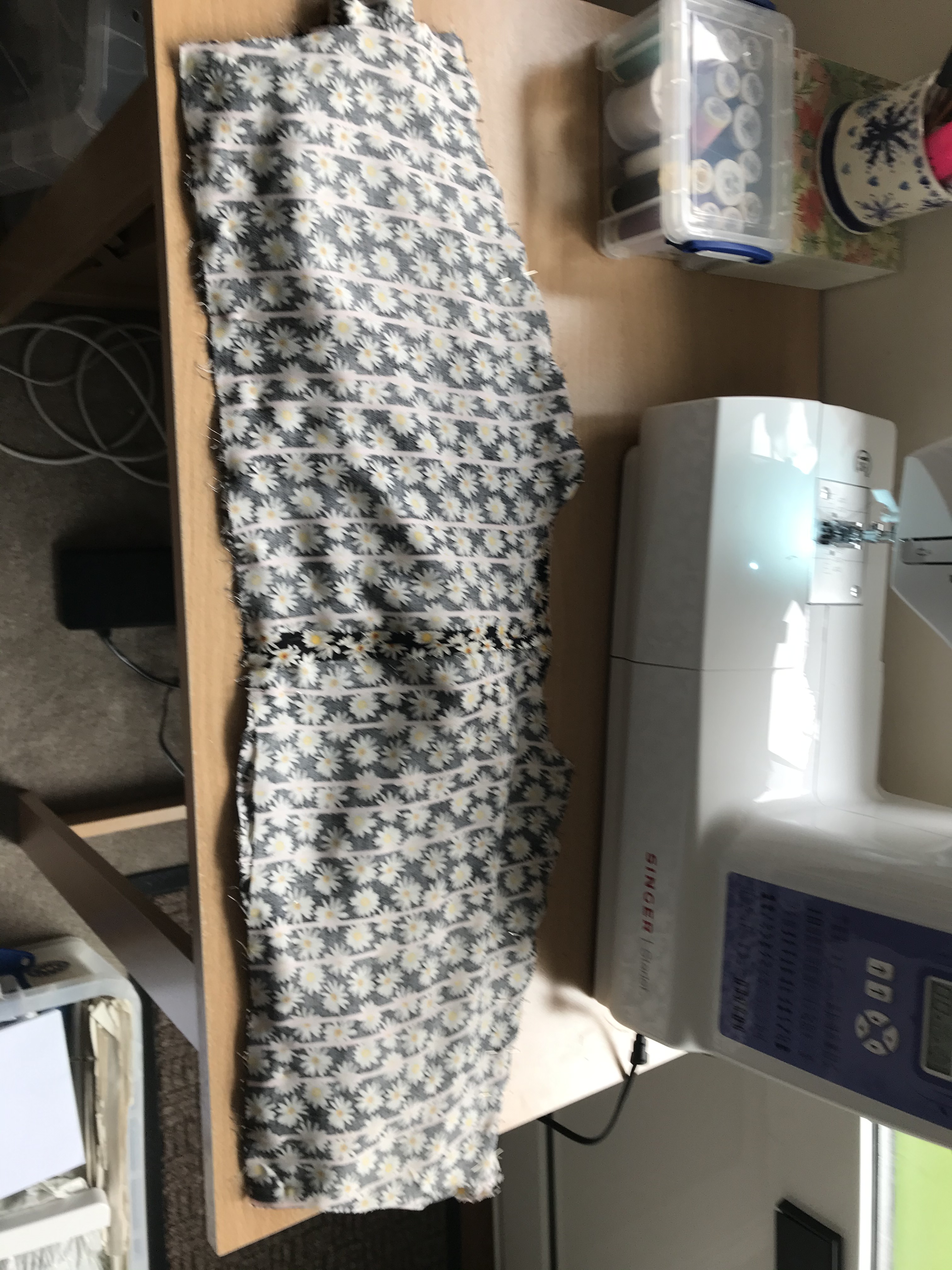
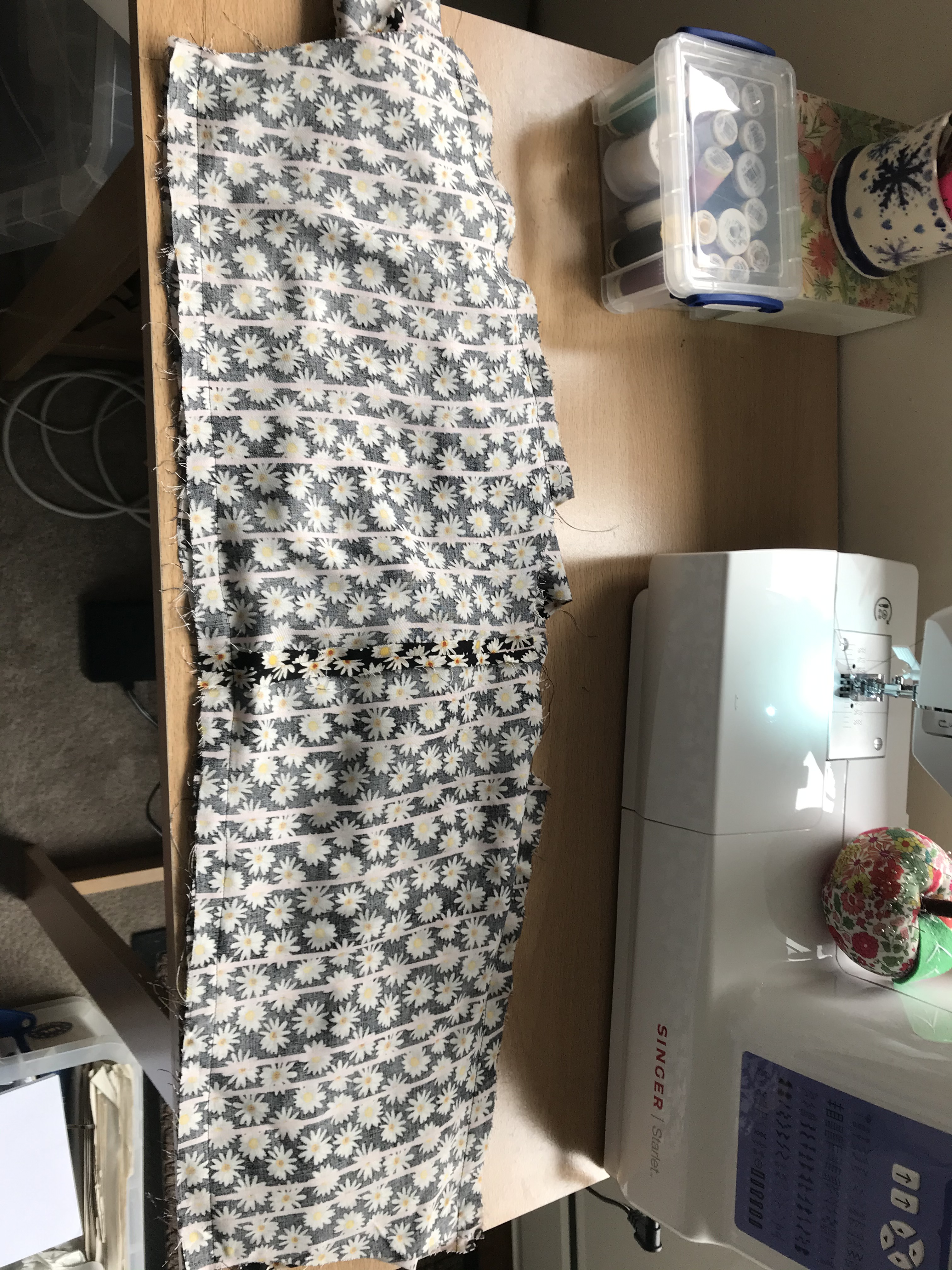
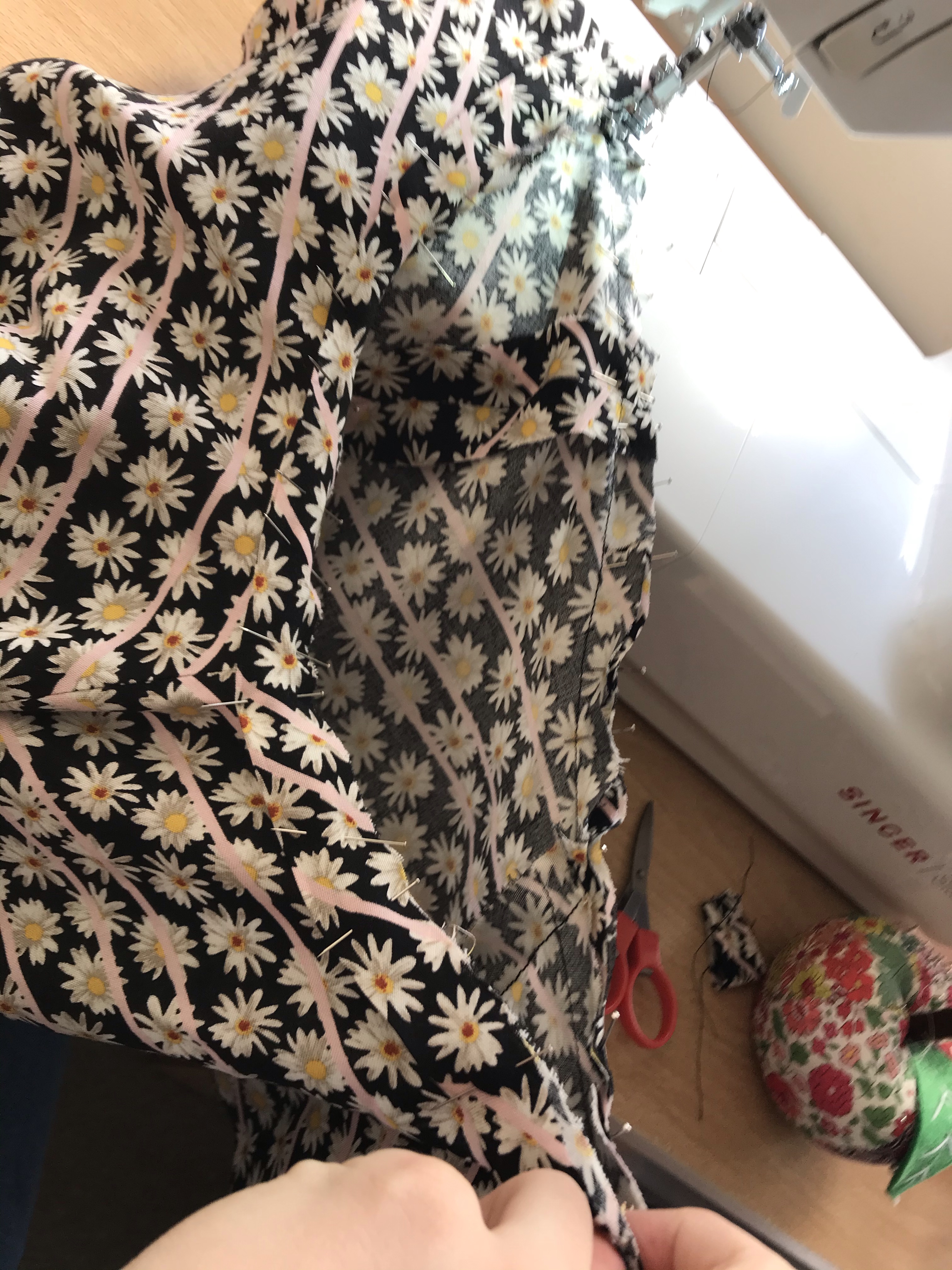
I forgot to take pictures of these as I went because I was so focused but here they are on the machine. Treat these carefully as you don’t want to warp the shoulder of the garment or stretch the silhouette. Shoulder seams press towards the back so you can include both sides of the seam in the neck bind and in the armhole hem.

Step 5: Bias Binding the Neckline

Now this top contained a lot of firsts for me, I’d never worked on the bias, I’d never done pattern matching and I’ve never really used bias binding let alone made my own. I’ve learnt a lot from this, I’m proud of my first go but it definitely isn’t quite right. When I look at the photo below and the garment itself I can see that I’ve bound the raw edge but not actually bound the neckline, you can’t see the binding which is a mistake. Next time I will definitely be pressing my binding more carefully so that its easier to use.

3 Things I’ve learnt about Bias Binding
  1. You’ve got to treat it gently especially if you’ve made your own and cut it carefully, its got to be even.
  2. Stitch slowly and carefully around the neckline so you don’t stretch it as you bind.
  3. Cut it carefully and iron it out fully before you fold it and then iron in the folds.

Step 6: Finish Raw Edges

The final step is just to finish the arms and bottom hem. Depending on the weight of your fabric you could use a double hem or, as I’ve done, just a quick rolled hem. Then you have your very own bias cut top!

I adore this top and I’m very proud of it but there are definitely a couple of bits I would change if I made it again. The fit is nice but I think the neckline is a little high for my figure so I would make it slightly deeper. My sewing has improved just making this top and I would definitely consider a garment with pattern matching again albeit with caution and careful fabric choice. Let me know what you think in the comments below, love pattern matching, hate it, have certain tricks you use? Tell me everything. Until then, go forth and pattern match!

Sewing Project: Shell Top / My First Forays Into Viscose

Hello lovely people, I hope you have had a wonderful weekend so far. Yesterday I hit 300 followers on my Instagram in just under four weeks! If you follow me on Instagram then, thank you! If you don’t then look me up @sowhatifisew . Anyway, on to this weekend’s challenge. As I had hit a little milestone and it was a miserable rainy day, we put a new series on Netflix and I decided to do a one-day sew. After my six month long dress project I needed a little palette cleanser so this project was ideal.

Last week I received a fabric haul from one of my favourite suppliers. They had a massive sale on so I went on a small fabric buying binge and I bought some beautiful fabrics. Not only that but I bought fabrics I was either nervous about using or had never used before. One of those was Viscose. As per usual when I work with a new fabric I spoke to my mum to check if there was a thing special I needed to do and she said that I didn’t need to use anything special but to mind out as the fabric can be slippery. I definitely found this to be the case. Once I got it into the sewing machine it sewed absolutely beautiful but oh my goodness I think I used about a million pins when I was attached the facing as it slips and stretches so easily. I will explain more as we go along but viscose definitely isn’t as scary as I thought it would be.

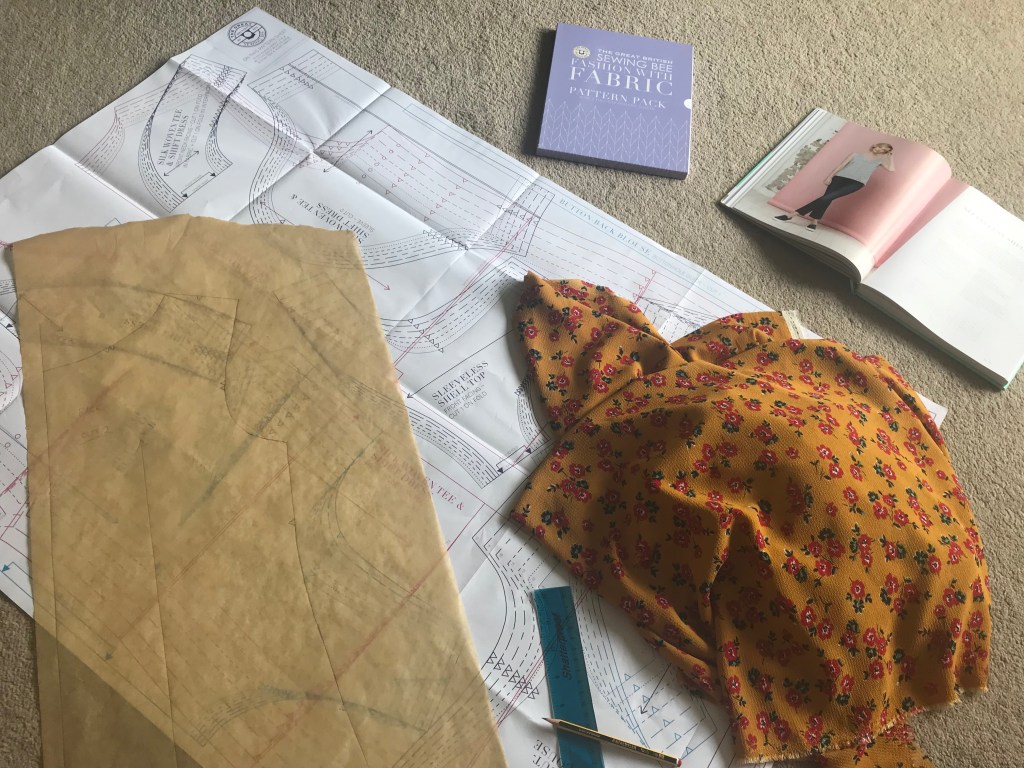
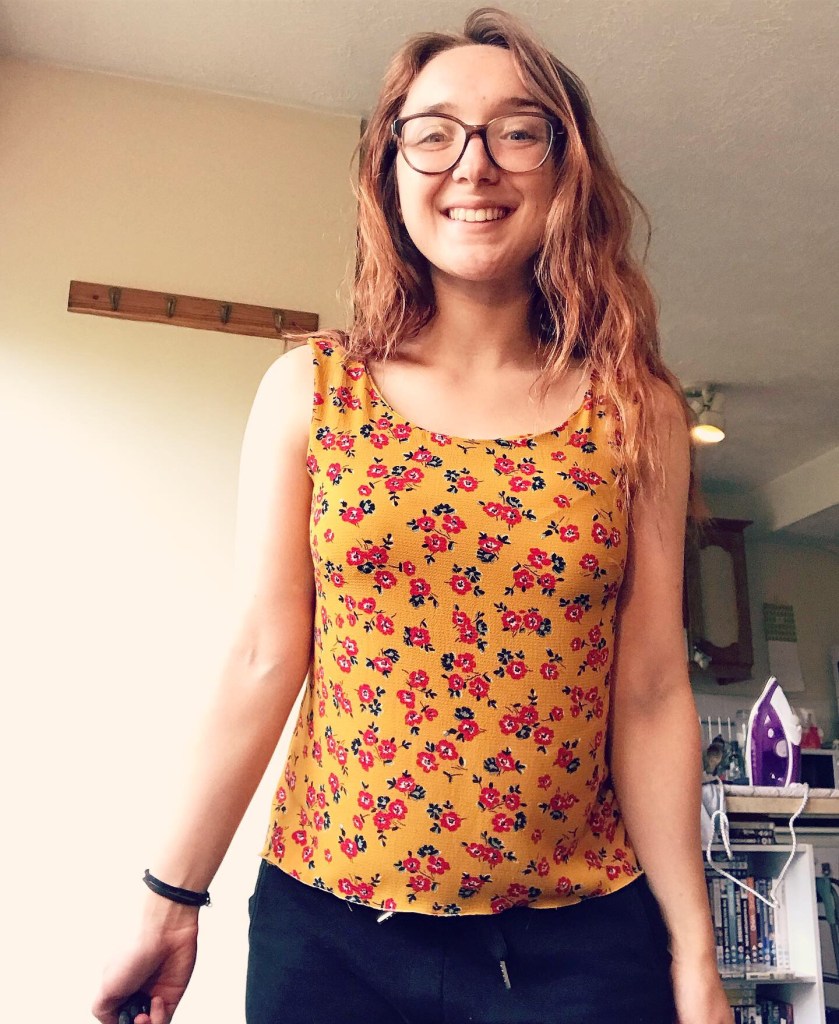
For this challenge I chose a simple shell top from the British Sewing Bee and used my gorgeous yellow floral viscose from Rainbow Fabrics Kilburn. This fabric has the most stunning drape and although it wasn’t a recommended fabric for this pattern I found that it worked very well. I’m glad that I chose a simple-ish pattern because as I have mentioned above, viscose is tricky to work with and I needed the simplicity to allow me to truly get to grips with the fabric. Also I realised recently that my wardrobe is pretty woeful in terms of tops and this pattern fits me really well so you may see a few more of these creeping into my DIY wardrobe.

Working with viscose is different from step one. Viscose is a little easier to work with if you iron it first so that’s what I did. Easier in comparison to what I shudder to think. When laying it out to be cut I had to enlist my partner, we took an end each, arched them up and laid the fabric down incredibly carefully. It was so slippery that I couldn’t actually manage to do it on my own and I wanted an even cut. Next time I use viscose I will cut with a rotary cutter because you get too much stretch in the fabric with scissors.

First Steps

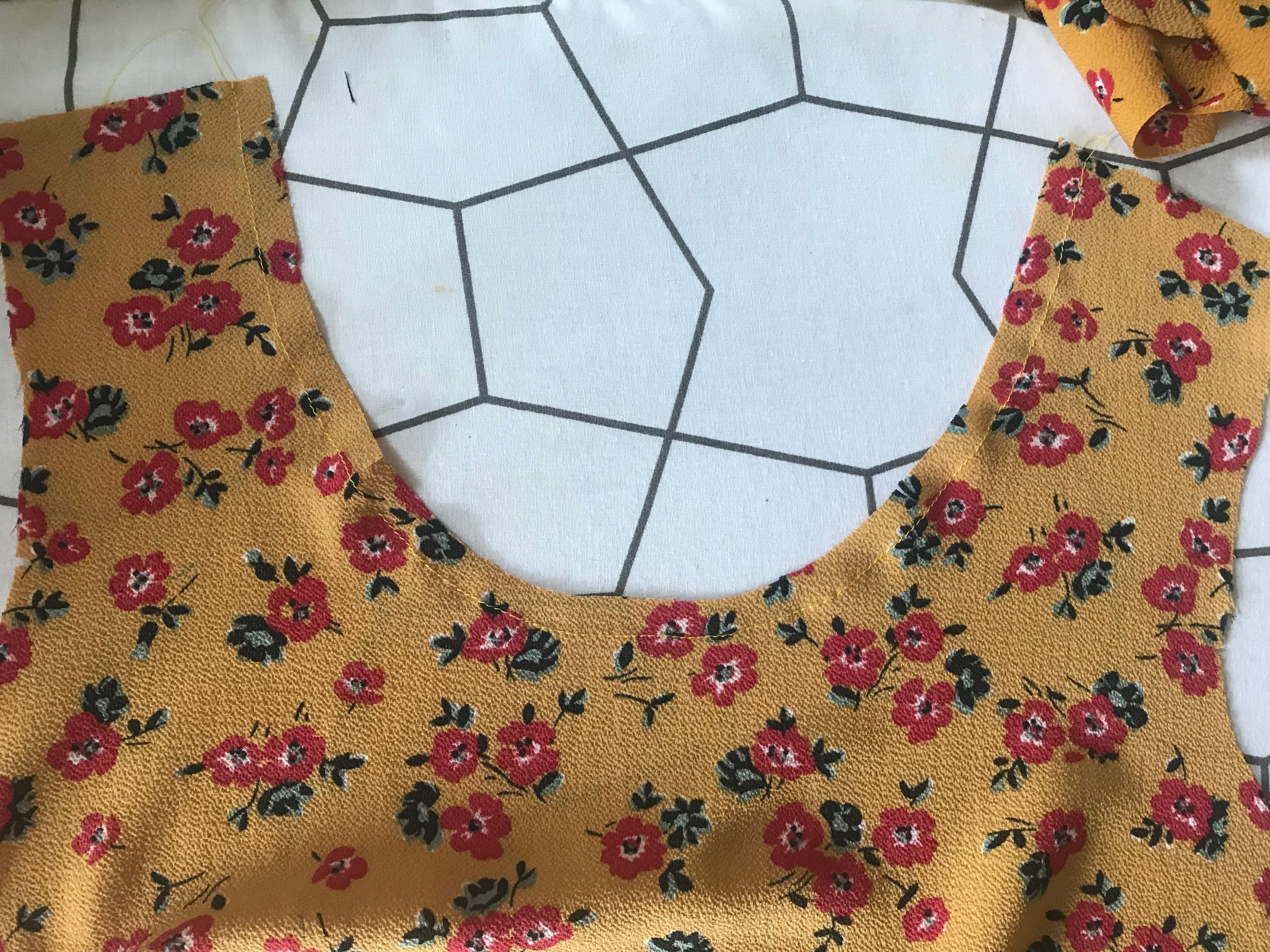
The first step of this pattern was stay stitching the necklines. Now generally I’m not great at remembering to staystitch but I always do necklines and I’m extremely glad I did in this case. There was a fair amount of stretch in the fabric so I was very careful working with it and used a lot of pins. On that note, I was so impressed with my darts on this top. They are the best darts I’ve ever done and sit really well on my bust when I wear the top. Then it’s a simple stitch together at the shoulder seams.

Facings & Interfacing

I had a problem here as I thought I had lightweight interfacing but I only had medium weight so instead I cut double of the facings from the fabric and stitched them together to stiffen the structure without having to use interfacing. This has worked very well in terms of structure but is a touch bulky. If I was doing it again, I would snip the seams down a little bit more.

The step that confused me the most was pulling the top through the facings once they were stitched. It was incredibly simple in actual fact but it looked impossible. The trick is to feed the back pieces through to the front and then voila! Remember to give it a good press.

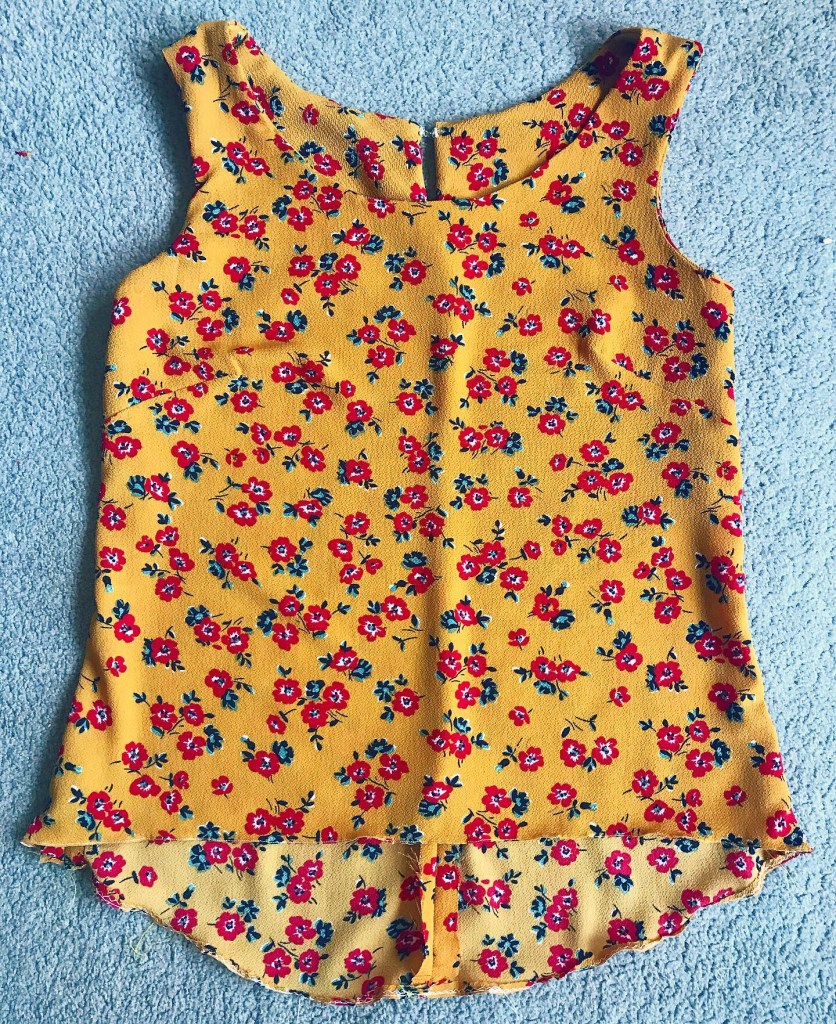
Then it’s a case of side and back seams and a hem! I used a hook and eye for the back fastening rather than a rouleau loop and button because I find them easier to use and I couldn’t find a button in the house that felt right for the garment. Then you’re done! It was a full day sew, 10am – 5pm, because viscose takes care and patience and the way I did the facings takes a little more time.

Here is the finished garment! This is a firm favourite and I’m going to make a few of them I think as they are perfect for work and home. I love the pattern so I will definitely make a few more and as they don’t take much fabric I might even be able to get a few more out of my fabric remnants box. Today we are having a friend over for a socially distanced lunch and then Adam and I will watch TV and I’ll do some more mask sewing for my grandparents.